Benchmade Bugout vs 940 Osborne: Which Knife Should You Buy?


In this Article
- Two of the Best Knives Of All Time
- A Closer Look at the 535 Bugout and 940 Osborne
- Bugout vs 940 Osborne: Which is Better?
- Viable Alternatives
- Final Verdict
- FAQ
TL;DR (Too Long; Didn’t Read)
If you’re looking for something lightweight, and your cutting jobs mostly include lighter tasks like slicing food and opening packaging, the Benchmade Bugout is for you.
If your cutting jobs include tougher tasks like slicing ropes or carving wood, and you prefer a more premium feel, I’d pick the Benchmade 940 Osborne.
Two of the Best Knives Of All Time
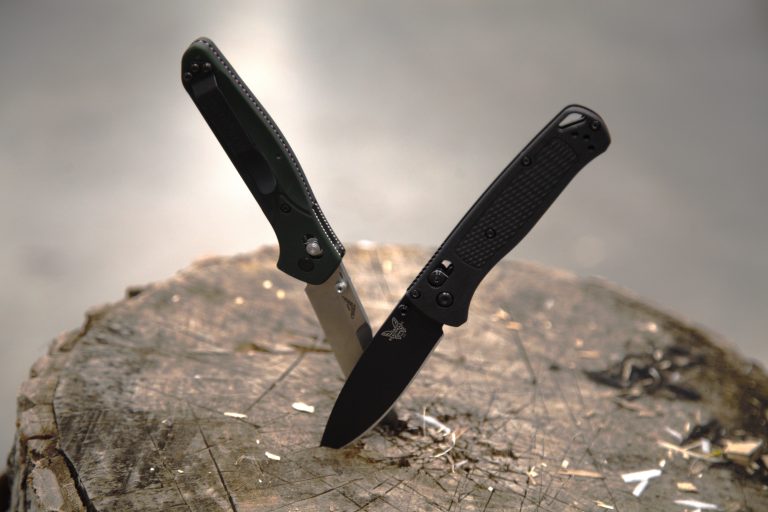
In the years I’ve worked in the knife industry, the Benchmade Bugout and 940 Osborne have tattooed themselves to the very essence of my soul.
When people ask me knife questions, they ask about these two knives more than almost any other.
I have disassembled, modified, and rebuilt these knives on countless occasions.
I have literally had dreams about these knives.
Blade HQ has sold thousands of these iconic blades, and we love them both.
But today, they’re going to war.
A Closer Look at the 535 Bugout and 940 Osborne
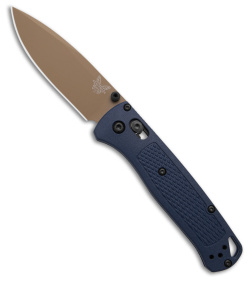
The Benchmade Bugout
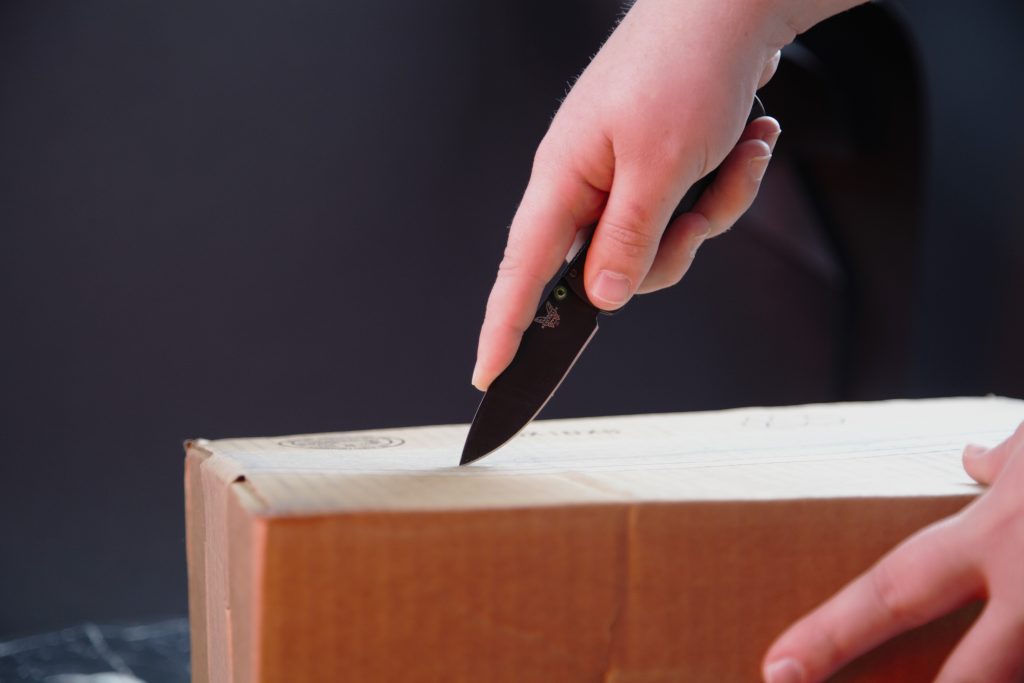
The Benchmade Bugout is the second best-selling knife in Blade HQ history, right after the Boker Kalashnikov (which you can read about in our Boker Kalashnikov Review).
I think the reason it’s been so incredibly popular is its clean, simple, and lightweight design.
It’s difficult to point to one distinguishing feature of the Bugout, and that’s a good thing.
It flies under the radar and, weighing in at less than two ounces, even you’ll forget it’s in your pocket.
That is, until you need it.
It offers a full handle with gentle texturing, providing a secure grip even with gloved hands.
The Bugout strikes a perfect balance of lightweight and concealable footprint and well-endowed handle and blade design for hard work.
It’s also backed up by a thriving aftermarket for handle scales, thumb studs, AXIS Lock bars, backspacers, and more.
Benchmade also produces a few upgraded variants with fancy blade steels and handle materials. There’s a Bugout for everyone!
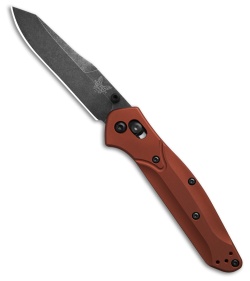
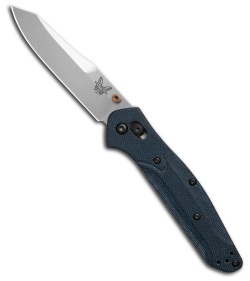
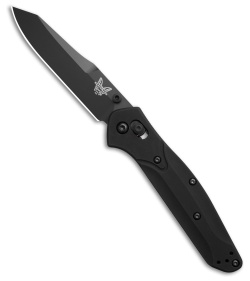
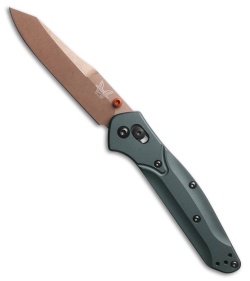
The Benchmade 940 Osborne
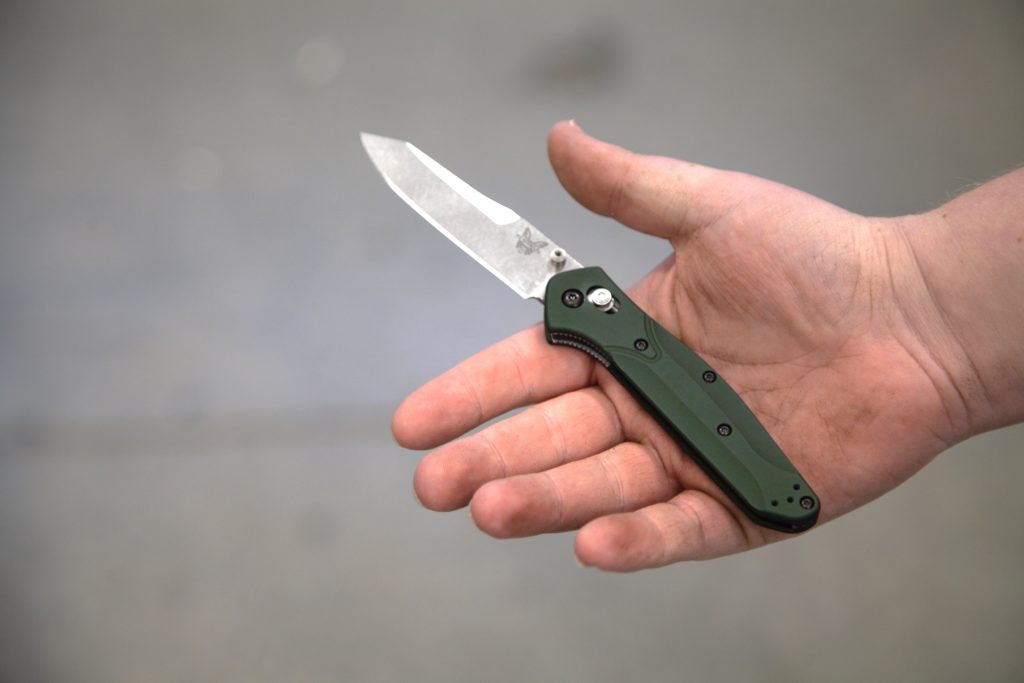
Warren Osborne designed the Benchmade 940 based on a fixed blade knife he made for his duties on a ranch.
People often describe its blade as a reverse tanto, but to my eye, that’s a spay blade.
Whichever way you think of it, the extra material near the tip of the knife provides this knife with great tip strength.
Behind that tip is a long, straight section of blade that lends itself to slicing and push cuts.
In my opinion, the more distinguishing feature of the Osborne is its handle. It’s rather slim compared to most other knives in its size range, but somehow still fills out the hand like a big knife.
This is what I love the most about the 940: It’s slim and sleek in the pocket but feels like a beefy cutting tool in the hand.
It has a fair amount of aftermarket support, but people don’t buy 940s to make them pretty. This knife wants to go to work.
Comparison Table
| Stats | 535 Bugout | 940 Osborne |
| Overall Length | 7.46" | 7.87" |
| Blade Length | 3.24" | 3.40" |
| Blade Thickness | 0.09" | 0.12" |
| Blade Style | Drop Point | Reverse Tanto |
| Blade Material | CPM S30V | CPM S30V |
| Handle Length | 4.22" | 4.47" |
| Handle Material | Grivory | Aluminum |
| Weight | 1.85 oz. | 2.90 oz. |
| Lock Type | AXIS Lock | AXIS Lock |
Bugout vs 940 Osborne: Which is Better?
Blade Thickness and Geometry
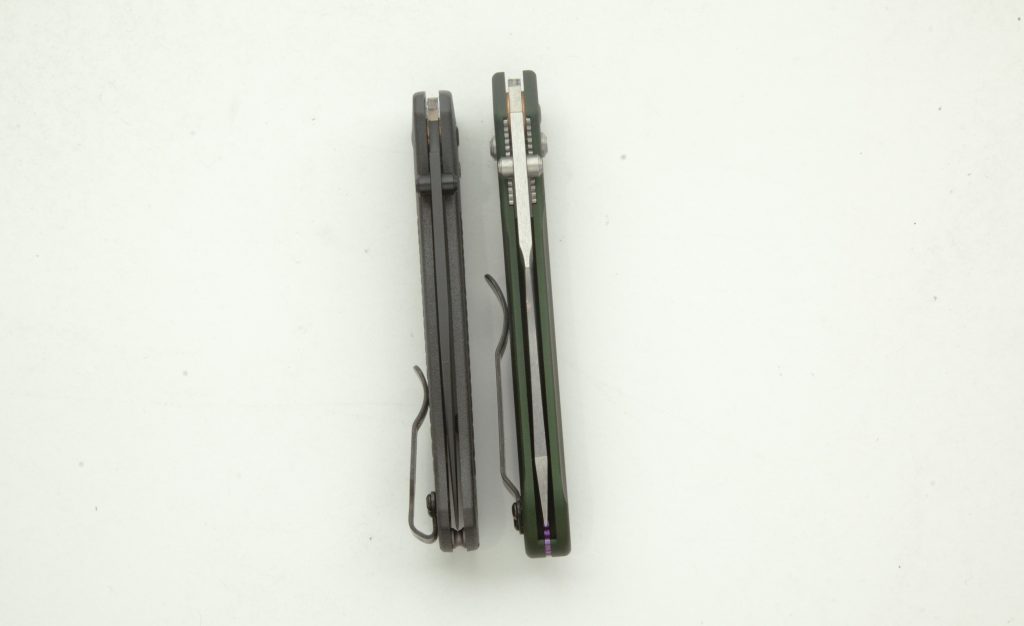
The great divide between these two knives is the blade thickness, width, and grind geometry.
The Benchmade 940 is just thicker than the Bugout. It’s simple physics: a thicker blade will have a harder time cutting through materials.
In addition, the 940 has a narrower blade and a partial flat grind, which makes for a thick edge. That means the 940 is much stronger and can tolerate more abuse, which makes it a great choice for hard users.
I carry my 940 when I go hiking because it’s small and light, but I know it can do some real work if needed.
But for EDC use, I gravitate to the Bugout. Its blade is wider, thinner, and has a broader grind, so its edge is very thin and slicy. It glides through tape, cardboard, paper, fruit, meat, etc. with ease.
But that thin edge needs to be respected more than the 940! The Bugout is not for scraping horse hooves, breaking sticks into kindling, or opening cans. Leave that work to a thicker knife!
Handle Material and Ergonomics
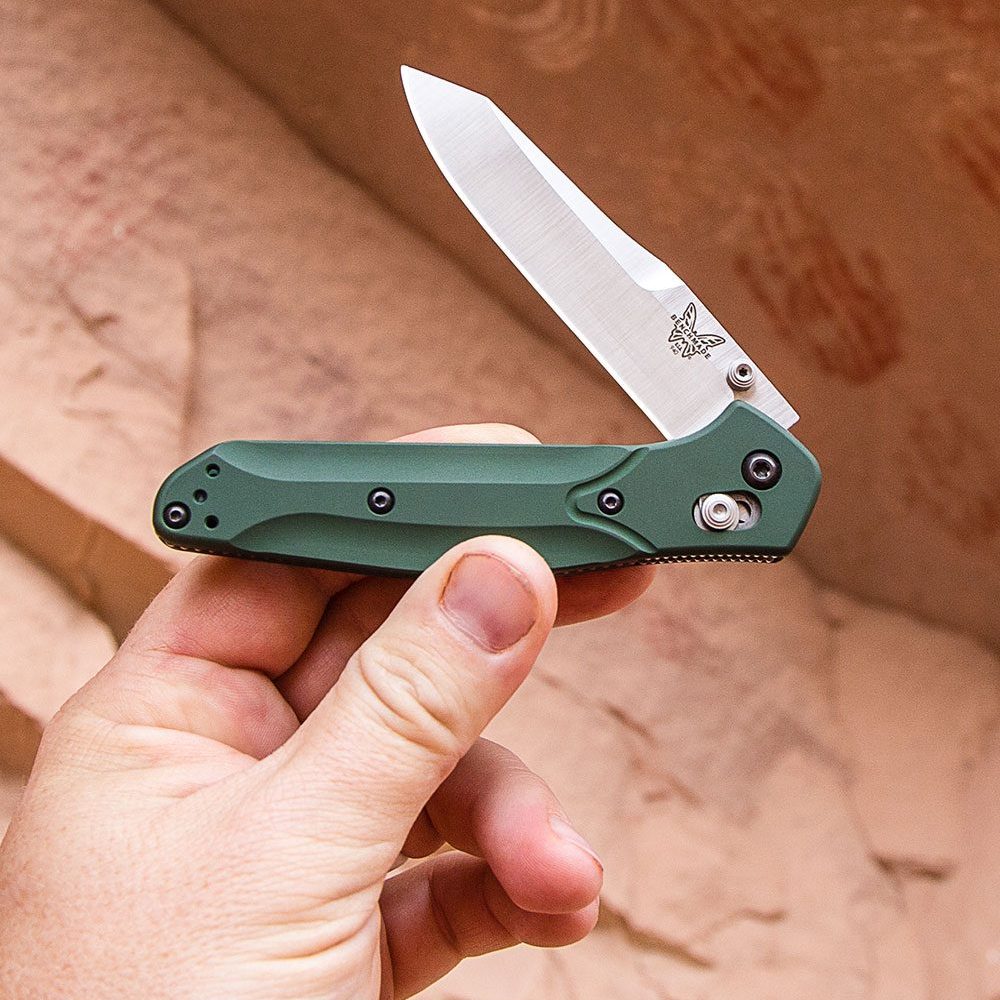
The second main point of contrast is the handle. The base model Bugout runs Grivory scales, while the 940 has aluminum.
Both are strong, both will hold up. But there’s no question: the aluminum is more ridged and feels far more premium.
One of the major gripes people have with the Bugout is that, due to how thin its Grivory scales are, just squeezing the middle of the knife is enough to make them flex inward. Some say it makes the Bugout feel like cheap plastic.
This is a problem you won’t have with the 940.
Conversely, the 940 is also much heavier thanks to its metal handle scales.
And while the Bugout may feel cheap thanks to how light it is, truth be told, those Grivory scales are super tough. They won’t go down without one heck of a fight. They also won’t show wear the way aluminum does.
EDC Considerations
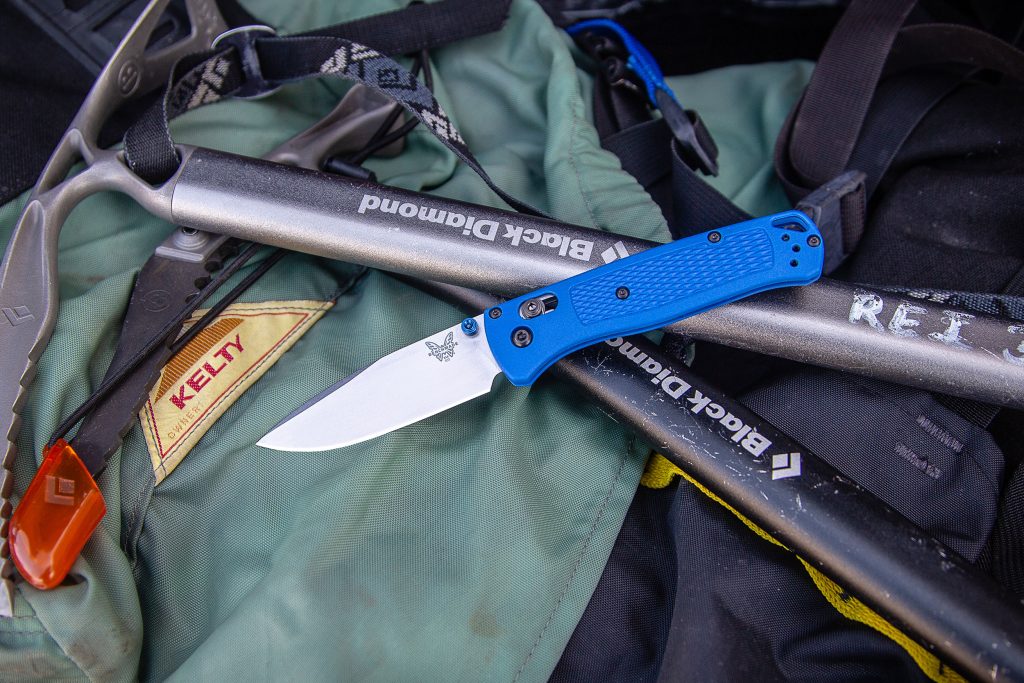
For everyday carry, the Bugout has a clear edge: It’s lighter and thinner and that goes a long way.
Being so lightweight, you can carry it even in gym shorts without weighing them down. It’s a knife you can always keep on your side. For many people, that’s important.
The 940 Osborne does have a more slender profile, however, which means it takes up a little less pocket space. Just something to consider.
Durability and Material Quality
As alluded to above, it’s not unreasonable to feel like the Bugout is a step down in quality from the 940 Osborne.
We already mentioned the thinner edge of the Bugout, which, while it will cut through most things like butter, it’s more prone to chipping than the more obtuse edge of the Osborne.
And while you’d be wrong to suggest that Grivory is a fragile material, at the end of the day, it is plastic. A very strong plastic, yes, but plastic all the same: it feels like plastic, sounds like plastic, etc.
Plastic and "cheap" often go together—but it shouldn’t always. The fact of the matter is, at a certain point, premium plastics like Grivory are better at hitting that sweet spot of high strength and tiny weight.
But if a premium feel is more important to you than light weight, the 940 is an easy winner.
Price and Value
These are premium knives—Benchmade is a premium, USA-made brand. If you want a merely functional pocket knife, you can get one at a better price.
But you’re reading this, so I’m comfortable assuming you’re looking for something better than "merely functional." With that important context out of the way, I’ll continue.
The Benchmade Bugout and 940 Osborne both offer excellent value, but for different reasons.
The Bugout is the more affordable option and stands out for its lightweight, easy-to-carry design.
The 940 costs more, but its aluminum handles, unique blade shape, and premium feel help justify the higher price.
Viable Alternatives
I know this article is about Benchmade’s 940 and Bugout knives, but after reading all that, if neither feels like the right fit, there are a few alternatives I think you should consider.
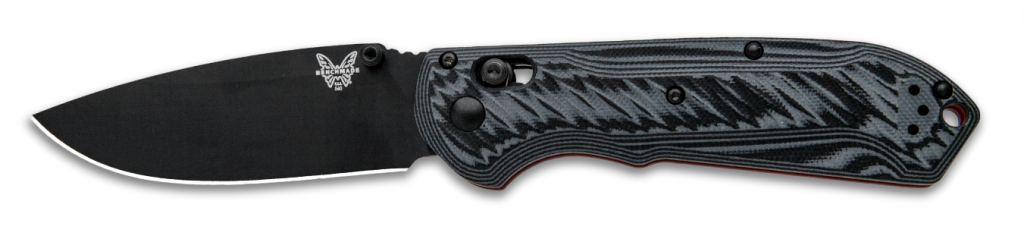
Benchmade Freek 560BK-1
Both the 940 and the Bugout’s base models come with a CPM S30V blade. This steels is prized for its high edge retention and stainlessness, but it’s not especially tough.
The 940 makes up for this with thickness, but that can only take you so far. That’s why my favorite Benchmade is the Benchmade Freek with its CPM M4 blade.
That steel will rust on you if you’re not careful, but it comes with a black Cerakote finish to protect it. Then you can enjoy the immense toughness and edge retention it offers!
Not only does it use a tougher steel, but the Freek is bigger and thicker than either the Bugout or 940; its grind is taller, too. In my opinion, it’s the best of both worlds.
If that sounds good to you, you could also check out the Spyderco Manix and the Microtech MSI.
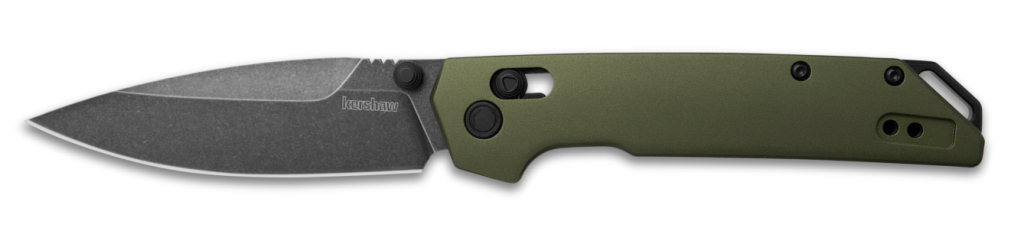
Kershaw Iridium
If you’re on a budget, consider the Kershaw Iridium. The AXIS Lock’s patent expired a few years back, and now other companies are getting in the mix.
This is a great knife for less than $65, featuring an aluminum handle and a D2 blade, plus Kershaw’s take on the AXIS Lock (called the DuraLock).
Other knives I’d recommend to people on a budget are the Bestechman Ronan and CJRB Hectare.
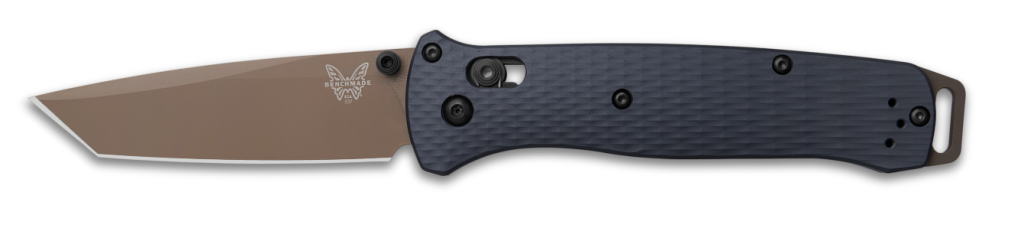
Like the Bugout and the Osborne but looking for something more tactical?
The Benchmade Bailout has been called "the tactical Bugout" by more than just me
I’d also consider the Microtech Amphibian, Benchmade Adamas, and SOG Seal XR, although all three of these are MUCH bigger.
Final Verdict
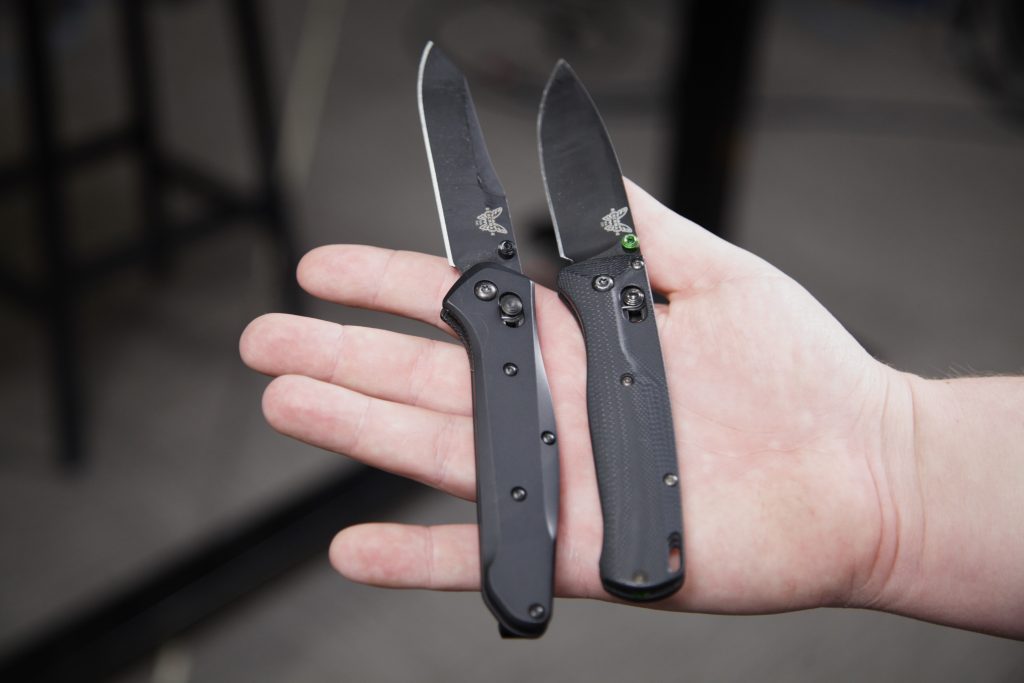
Ultimately, it’s up to you. But if it were up to me?
If I had to get rid of either my Bugout or my 940 Osborne, it would be hard, but I think I’d say goodbye to the Bugout.
I love the metal handle on the 940, and its blade feels so usable to me.
I’d shed a tear or two for the Bugout, but I think I prefer the 940. But don’t ask me again tomorrow: I might give you a different answer.
So…
Choose the Benchmade Bugout if…
- You prioritize low weight
- You want a minimalist EDC knife
- You wear athletic or lightweight clothing
- You prefer simple, to the point designs
Shop the Bugout
Carousel
Carousel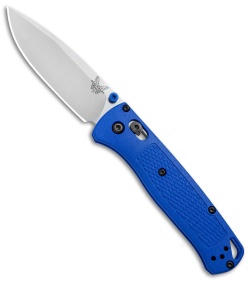
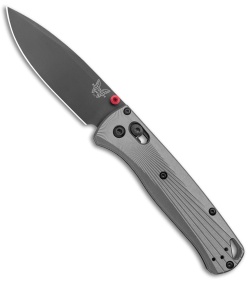
Choose the Benchmade 940 Osborne if…
- You prefer premium materials
- You like the reverse tanto (or spey) blade shape
- You want a more substantial folder for tougher jobs
- You appreciate its iconic designs
Shop the 940 Osborne
Carousel
Carousel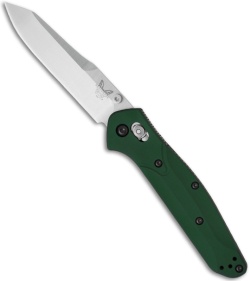
-thumb.jpg)
FAQ
Is the Benchmade Bugout or 940 Osborne better?
The Bugout is better for users prioritizing lightweight everyday carry, while the 940 Osborne is better for those wanting a more premium handle material, greater durability, and iconic design.
Is the Benchmade 940 worth the higher price compared to the Bugout?
Many users find the 940 worth the higher price because of its aluminum scales, time-proven design, and long-standing reputation as one of Benchmade’s flagship EDC knives.
Is it worth buying both a Bugout and a 940 Osborne?
For many knife enthusiasts, the answer is yes. Both are exceptional designs worthy of any collection. They serve different enough functions that you’ll often find occasion to carry one over the other.


 Copyright © 2026 Blade HQ. All rights reserved