Fixed Blade Vs Folding Knife – What’s Better for You?


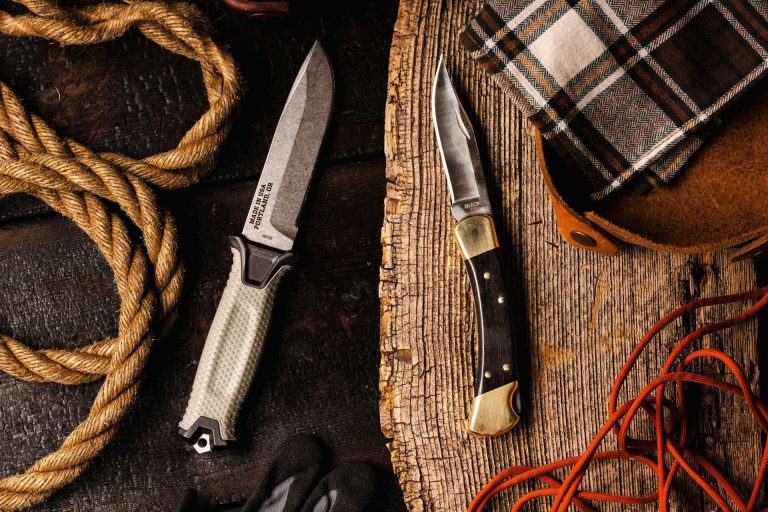
The first knives ever made were all fixed blades. But somewhere in history, someone had the genius idea to make a knife that could fold in on itself to be smaller and more pocketable. And as long as folding knives have existed, there has been a raging debate: fixed vs folder. Both have merit and both have weaknesses, but one might be a better choice for you. Today, these knife types will go toe-to-toe, and we’ll find the knife best-suited for your needs!
I’ve identified seven traits to compare the two on. I’ll describe them below, as well as which knife is better in each. Hopefully by the end, you’ll have all the knowledge you need to make the right choice for you!
Prefer watching videos? Check out this video on the topic!
Where the Fixed Blade Wins
Strength and Durability
The fixed blade is the king of strength and durability in knives. It’s been said that folders are "pre-broken in the middle," which is kind of their whole thing. Even the strongest knife lock is weak compared to the solid steel tang that makes a fixed blade.
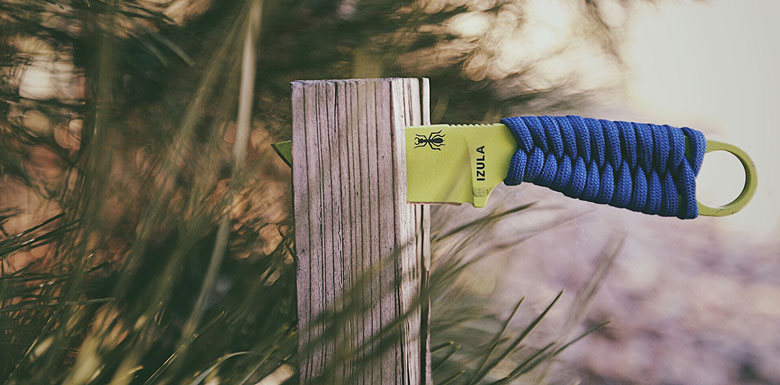
But with that said, modern knife locks are plenty strong. Often, they’re stronger than you even realize. In all my time in the knife community, I’ve been surprised at how few lock failure horror stories I’ve heard. Unless you’re really beating on your knife, like batoning, chopping, or prying, a folder will probably be strong enough for your needs.
Safety
Using a fixed blade is just safer. The fact that folders fold in half means that when closing, the sharp edge passes through the handle, which your hand holds on to. If that knife folds at the wrong time, you can get cut. And it’s not just when the lock fails. I’ve seen more people get cut by a knife during a deliberate closing sequence than any other accident. All it takes is a little bump, a moment of distraction, cold fingers, gloves, or a million other tiny things to make simply folding a knife dangerous.
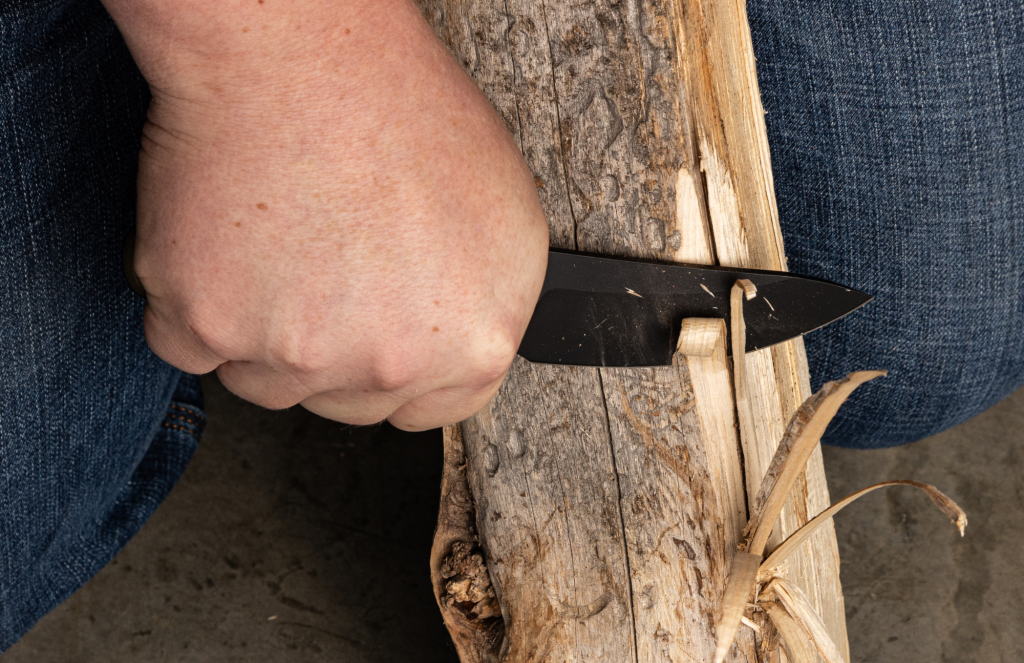
And don’t even get me started on slip joints, which don’t lock and snap shut. Easily the worst cut I’ve ever seen came from a slip joint.
Fixed blades, on the other hand, have no moving parts. The only way I’ve seen people get cut by a fixed blade (or been cut myelf, I’ll admit it), is mishandling. If you follow the rules of basic knife safety, a fixed blade will never bite you.
Maintenance
Because there are no moving parts on a fixed blade, there is no pivot to lubricate, internal handle to dust, pocket clip to bend, or screws to tune. In fact, many fixed blades have glued and pinned handle scales that never come off at all. The only real maintenance they need is sharpening. This is one of the major reasons kitchen knives are fixed blades. Can you imagine cleaning food, oils, and other gunk out of a pivot every time you cook? No thank you!
Versatility
Fixed blades come in any size, shape, and design you can think of, and many you cannot. Folders have an inherent disadvantage: they must fit their blade inside a handle. That limits the options you can have with your blade. You ever notice how few folding Kukri knives there are? That every trailing point folder has a handle that looks like a banana? That’s because folders limit options when it comes to blades.
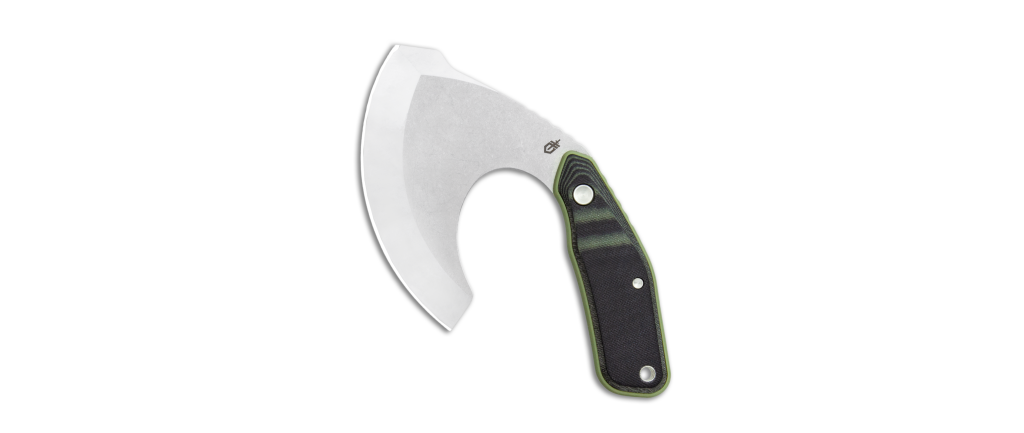
But if you want a heavy chopper, a 5" karambit blade, or something wild like an ulu, a fixed blade is your only option. This is another reason kitchen knives are fixed blades. If you want a well-balanced chef knife, you need a handle much shorter than the blade, and a folder just can’t give you that without some wild mechanisms.
Where the Folding Knife Wins
Carry Convenience
Carrying a folder is way easier than carrying a fixed blade. Because fixed blades don’t collapse, they are physically larger than a folder during carry, and to add insult to injury, they require a sheath. Be it on your hip poking you in the ribs, horizontally on your back snagging on stuff around you, or in your pocket causing a sweaty spot on your thigh, fixed blades are just less convenient.
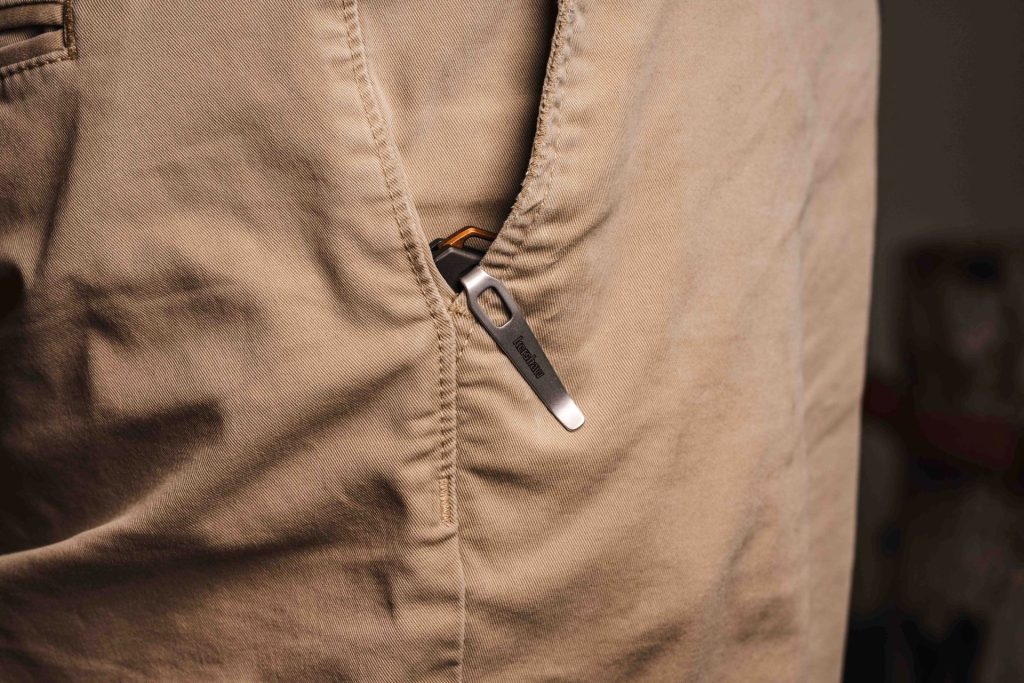
But a folder? No sheath required. Just tuck it in your pocket and be about your business. You’ll probably forget it’s there! And as an added bonus, because it folds and there is no sheath, you get a lot more cutting edge per square inch of pocket space. I believe this is the big reason folders outsell fixed blades. If something isn’t convenient, people won’t carry it. That’s why people carry smartphones instead of laptops!
Legality
For reasons I will never understand, folders are usually more legal to carry than fixed blades. As we discussed earlier, fixed blades are safer, stronger, and more versatile, but they are more regulated in much of the world. Rules about length, concealment, how many edges, etc. all apply to fixed blades in some areas, and some of the rules are frustratingly vague. Each of us has the obligation to our society to obey the law, so if fixed blades are illegal to carry in your area, this decision should be easy.
But don’t think folders are off the hook. There are plenty of weird laws about them, too. Especially when you get into switchblades. But that’s a story for another day! The big point I want you to take away from this section is knife laws are odd, and a folder is more likely to be legal in your area than a fixed blade. Make sure to check local laws before picking a knife if you’re worried about it.
Social Acceptability
Whether you know it or not, there is a dress code everywhere. You don’t see dress shoes at the beach, pajamas in boardrooms, or fixed blades in grocery stores. Fixed blade knives come with a vibe that belongs on the trail, in the backcountry, or in the garden. If you happen to carry one to the office, a restaurant, or the park, it will probably turn some heads.
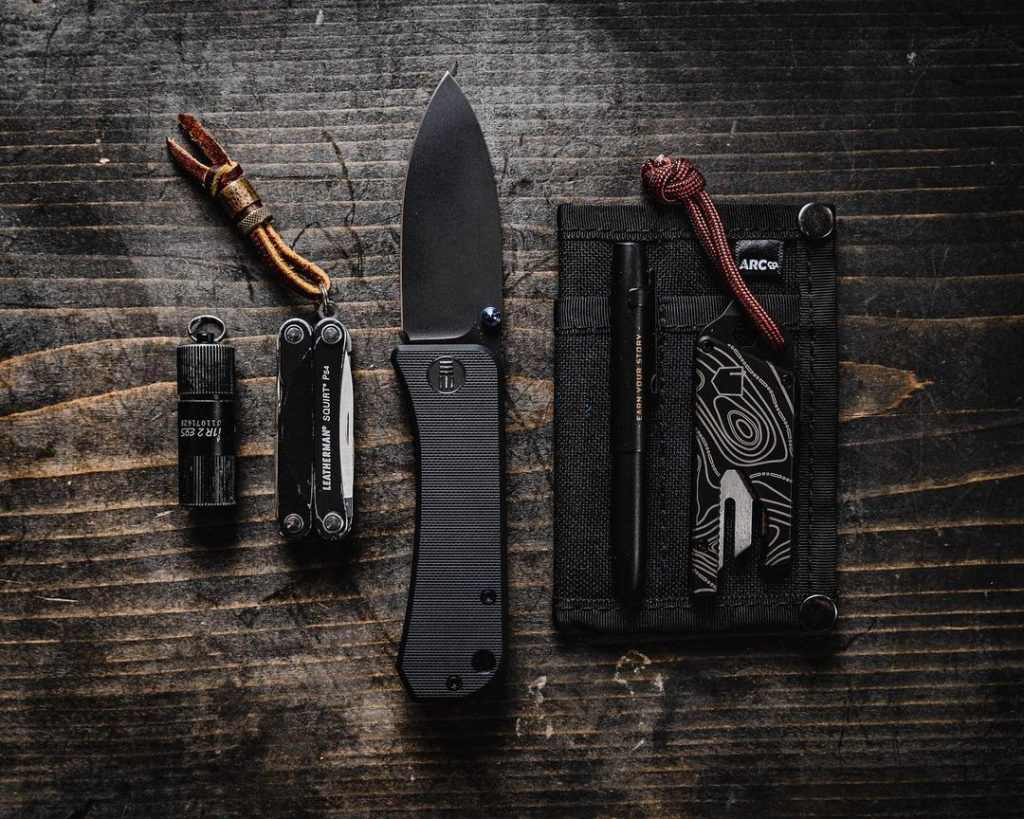
But a folder? That’s a different story. Carrying a folding knife says "I’m tasteful, but prepared for anything. I’m the kind of guy who can help you out of a tough spot without turning the place into an active warzone." Much more socially acceptable indeed!
Fixed Blade or Folder?
I believe there are two right answers to this question. If you’re asking because you want the best-performing knife possible, I will tell you to get a fixed blade. They are stronger, safer, and more versatile, and in my opinion, they are just better cutting tools. Also, look above! Fixed blade won four rounds, and folder won three, so fixed blade wins it all.
If you’re asking because you’re trying to pick a knife to carry everyday, then a folder might be a better pick. They don’t make you look weird in public, they’re way easier to carry, they’re less likely to become Exhibit A, and they’re strong, safe, and versatile enough to do most of the work you require of your knife. And while the folder only won three rounds, I have a folder in my pocket right now. It’s a Pro-Tech TR-3 Integrity, thanks for asking!
But if I may be so bold, the best choice is one of each. Grab a folder that you love and carry it every day. You will be better for it. But also grab a hearty fixed blade and pull it out when you have more and harder work to do. Yes, that’s a bit of a copout, but hear me out. While some knives are very expensive, you can get both a great folder and a great fixed blade for less than a $100.
The big thing I learned from this exercise is that both folders and fixed blades have their place. What’s perfect for me probably isn’t perfect for you and vice versa. But luckily for both of us, there is a wide world of knives out there. And whether a fixed blade or a folder is best for you, you’ll find it at Blade HQ!


 Copyright © 2026 Blade HQ. All rights reserved