



Knife Steel Guide


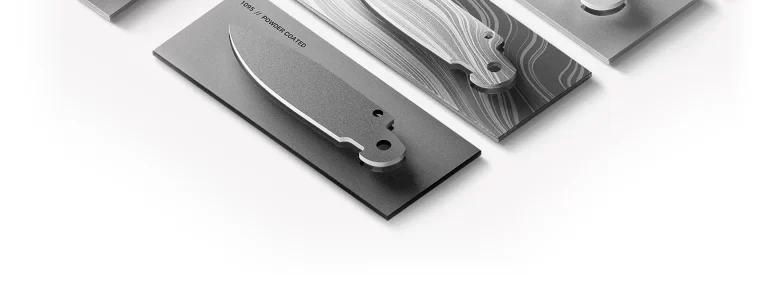
Table of Contents
Introduction
Welcome to the Blade HQ Knife Steel Guide where you can explore our knife steel charts, learn the difference between steels, and discover the best knife steel for you!
In this guide, you’ll find detailed information covering dozens of popular knife steels, including MagnaCut, M390, D2, and so many more.
Whether you want to read about an individual steel in depth, peruse steels based on how they rank in certain categories, or compare two steels side by side, we’ve got you covered.
There are four attributes to consider when determining whether a knife steel is right for you:
- Edge Retention
- Toughness
- Corrosion Resistance
- Ease of Sharpening
Each contributes to a knife’s overall performance. Let’s look at each more closely.
Understanding Knife Steel Ratings

Edge Retention
Edge retention refers to how long a blade will remain sharp before dulling from use.
Though seemingly straightforward, it can be somewhat complicated because many thing can cause an edge to dull: wear, micro-chipping, deformation, corrosion, etc.
Most edge retention tests isolate wear resistance (how long it takes abrasives to dull your edge).
Wear resistance comes from hardness (often achieved through heat treatment) and carbides, which are hard particles formed between carbon and other elements such as vanadium or tungsten.

Toughness
Toughness is how resistant a steel type is to chipping or breaking. Tough steel can handle impacts without gross chipping or the tip breaking off.
Steels with higher hardness and wear resistance usually score lower in toughness. This is one of the fundamental tradeoffs in steel.
Steels with high edge retention and toughness are usually more desirable for general-use knives.
Steels high in toughness are excellent for blades likely to take hard impacts, such as those on large choppers.

Corrosion Resistance
Corrosion mostly takes the form of rust, patina, and staining.
Corrosion is not only cosmetic: It can dull your edge, cause pitting, and reduce your knife’s structural integrity.
Stainless steels are more resistant to corrosion, but remember that stainless steels stain less; many of them will still rust in the right conditions.
Being stainless is not an on-or-off property, and some stainless steels are more corrosion-resistant than others.

Ease of Sharpening
Ease of sharpening refers to how easy or difficult it is to remove material from a knife edge to restore its sharpness.
Wear resistance is the most significant determining factor when it comes to ease of sharpening.
Other factors include how thick your edge is, how dull your knife was at the start, the nature of the heat treatment, and what you’re using to sharpen your knife.
The charts in this article rate ease of sharpening primarily based on wear resistance. But if a knife is difficult to sharpen, there may be other factors at play.
Methodology: How We Rate Knife Steels
For each attribute, we assigned a rating out of 10 for all four factors above.
But we didn’t pull the stats out of thin air.
To ensure our ratings were as useful and accurate as possible, we consulted a longtime friend of Blade HQ: Dr. Larrin Thomas.
Dr. Thomas is a professional metallurgist raised by a knifemaker, and he’s the mastermind and writer behind Knife Steel Nerds, a highly reputable repository of knife steel knowledge.
Dr. Thomas’s expertise was invaluable in assembling this guide. The numbers he provided come straight form his extensive tests and experiments, so we’re confident the information provided in our charts is accurate.
Knife Steel Charts
Now that we know what each factor represents, we can see how the steels rank against one another. Choose a factor below to start sorting.
If you want to learn more about a specific steel, just give it a click!
Edge Retention
Toughness
Corrosion Resistance
Ease of Sharpening
Premium Steels
High-end Steels
Mid-Range Steels
Budget Steels

Side-by-Side Knife Steel Comparison
Should you continue to scroll, you may find yourself lost in a seemingly endless list of knife steels.
While some are into that, if you’re familiar with a specific steel and want to compare it with another, you should definitely check out our Comparing Knife Steels tool.
You can select any two blade steels and see their stats in a handy chart!
What the Ratings Don’t Tell You
There are two main factors that aren’t related to the steel you choose that significantly affect your knife’s performance.
Heat Treatment
If you shop for knives based on steel alone, you might be disappointed: Even premium steels can perform poorly with a poor heat treatment.
Heat treatment refers to the heating and cooling steps employed to achieve your blade’s proper balance of attributes.
Poor heat treatment can make a knife too hard, too soft, difficult to sharpen, easy to deform, or cause other issues.
Since it’s impossible to tell how good a heat treatment is with your eye (or via an online listing), you must often rely on the manufacturer’s reputation.
Edge Geometry
This refers to the angle of your knife’s edge and the thickness of the blade behind the edge.
More obtuse edges resist chipping better but don’t hold their edge as long and don’t cut as well.
More acute edges are more brittle but remain sharp for longer and cut very well.
Is There a "Best" Knife Steel?
The unexciting but true answer is there isn’t one. Some blade steels are better suited to certain tasks than others.
The key to choosing the right steel is understanding the trade-offs (e.g., trading some edge retention for greater toughness) and choosing the steel that best fits how you’ll use your knife.
The cutting job at hand is your best guide for what features you should prioritize between edge retention, toughness, corrosion resistance, and ease of sharpening.
But don’t worry, we’ve done the work for you by grouping the best steels by use case below.
How to Choose a Knife Steel by Use Case
So you want the right steel for the job. We’ve highlighted common knife use-cases with a few steel recommendations for each:
Best Steels for Everyday Carry (EDC)
For your everyday carry (EDC) knife, you’re likely looking for a low-maintenance steel with long-lasting sharpness that won’t rust easily. Here are four great options:
- CPM MagnaMax
- M390
- CPM S45VN
- CPM S90V
Best Steels for Hard Use
Hard-use knives will be under more stress than EDC knives. You’ll want a steel that can take hard impacts and be easy to maintain and sharpen. Consider the following:
- CPM MagnaCut
- CPM S35VN
- CPM M4
- 14C28N
Best Steels for Outdoor Use, Bushcraft, & Survival
Outdoor knives take a beating. You’ll need a steel that’s super tough and easy to maintain. Stainless steel is also a plus, but carbon steel with a blade coating is also good:
- CPM 3V (Coated)
- CPM Cru-Wear (Coated)
- CPM MagnaCut
- 1095 (Coated)
Best Steels for Hunting & Field Dressing
While hunting and skinning, you’ll want a super sharp stainless steel knife that won’t rust. The following are all great options:
- 420/420HC
- CPM MagnaMax
- CPM S30V
- CPM 20CV
Best Steels for Fishing, Saltwater, & Marine Use
Fishing/water knives see a lot of corrosive fluids, so they should be corrosion-resistant above all else. High edge retention is the next highest priority:
- CPM MagnaCut
- LC200N
- H1/H2
- Vanax
Best Steels for Kitchen Use & Food Prep
In the kitchen, you’ll want a stainless steel blade that won’t rust and one that’s easy to sharpen for smooth cuts. These are some solid choices:
- AEB-L
- VG-10
- 14C28N
- CPM 154
Best Budget Steels
Maybe you’re on a budget and are looking for the highest-value blade steels. These steels offer the most bang for your buck and are generally found on more affordable knives.
- 14C28N
- 420/420HC
- D2
- 154CM
Damascus Steel
Damascus, or ‘pattern-welded’ steel, is the result of folding two steels together several times. Think of it like folding and rolling croissant dough with butter several times to make all the delicious layers.
As such, the performance of Damascus steel is entirely dependent upon the two steels being utilized.
And that’s its own massive topic.
The vivid patterns in Damascus steel result from acid etching: The two steels patina at different rates, allowing one steel to etch darker than the other, creating a pattern based on how the metal was folded.
Damascus steel is usually chosen for its looks rather than its performance. Also, most Damascus steel is made by skilled blacksmiths, so it tends to be expensive.
Other Knife Steel Facts Worth Knowing
Steel Equivalence
Many steels are very similar to one another but go by different names from different manufacturers; they differ little in composition and treatment.
For example, Bohler M390, CTS 204P, and CPM 20CV are all nearly identical; they’re indistinguishable in practice.
If you’re having trouble finding the steel you want, see if another manufacturer offers something similar.
Why Some Steels Are More Expensive Than Others
Many knife enthusiasts are concerned with categorizing steels as "excellent" or "super," "good," "poor," etc. People use these terms to describe both price and performance.
Steels with high wear resistance is more costly to manufacture, as the knife company goes through more abrasives to shape it.
Steels high in carbides can’t be stamped out; it must be cut by a waterjet or laser, which takes time and is more expensive.
Steels without these attributes are significantly less costly.
Powder Steels
The most significant cost increase comes from powder metallurgy, which is used to produce most "premium" or "super" steels.
It’s a process in which liquid steel is sprayed through a tiny nozzle, solidifies into a powder; it’s later heated and compressed into ingots.
It’s a costly and challenging process, but it makes extremely fine-grained steels—some of the best for knives.
The big names in powder metallurgy are Crucible/Erasteel (CPM steels), Carpenter (CTS steels), Bohler Microclean (M390), and Uddeholm Superclean (Elmax, Vanax).
Complete Knife Steel Comparison Table
| Steel Types: | 420 | 1095 | 52100 | 12C27 | 14C28N | 154CM | 440A | 440C | 8Cr13MoV | A2 | AEB-L | AUS-8 | CPM 10V | CPM 154 | CPM 20CV | CPM 3V | CPM 4V | CPM CruWear | CPM M4 | CPM MagnaCut | CPM MagnaMax | CPM S110V | CPM S30V | CPM S35VN | CPM S45VN | CPM S90V | CPM SPY27 | CTS 204P | CTS BD1 | CTS BD1N | CTS XHP | D2 | Elmax | H1 | H2 | K390 | LC200N | M390 | M398 | Maxamet | N690 | Nitro-V | O1 | SK5 | Vanax | VG-10 | ZDP 189 |
| Edge Retention: | 2.5 | 2 | 2 | 2.5 | 3 | 4.5 | 3.5 | 4 | 3 | 2.5 | 3 | 3 | 8.5 | 4.5 | 6.5 | 4.5 | 5 | 5 | 6 | 5 | 7.5 | 8.5 | 6 | 5 | 5.5 | 9 | 5 | 6.5 | 3.5 | 4.5 | 5.5 | 5 | 5.5 | 1 | 1 | 8.5 | 3 | 6.5 | 9 | 10 | 4.5 | 3 | 2 | 1.5 | 5.5 | 4.5 | 8 |
| Toughness: | 10 | 4.5 | 8.5 | 9.5 | 9 | 3.5 | 3.5 | 3.5 | 6 | 6.5 | 9 | 6 | 5 | 5 | 3.5 | 9 | 7 | 8 | 6.5 | 7 | 6 | 3 | 4 | 5 | 4 | 3.5 | 5 | 3.5 | 5 | 3.5 | 5 | 3.5 | 4 | 10 | 10 | 5 | 8.5 | 3.5 | 2.5 | 1.5 | 3.5 | 7.5 | 4.5 | 8 | 5 | 4 | 2 |
| Corrosion Resistance: | 8 | 0.5 | 0.5 | 8 | 8.5 | 7 | 8.5 | 7.5 | 7 | 3 | 7 | 7 | 4 | 7 | 9 | 5.5 | 4 | 5.5 | 4 | 9.5 | 9.5 | 9 | 7.5 | 7.5 | 8 | 7.5 | 7.5 | 9 | 7 | 8.5 | 6.5 | 4.5 | 8 | 10 | 10 | 4 | 10 | 9 | 9 | 4.5 | 8 | 7 | 0.5 | 0 | 10 | 7.5 | 5 |
| Ease of Sharpening: | 8.5 | 9 | 9 | 8.5 | 8 | 6.5 | 7.5 | 7 | 8 | 8.5 | 8 | 8 | 2.5 | 6.5 | 4.5 | 6.5 | 6 | 6 | 5 | 6 | 3.5 | 2.5 | 5 | 6 | 5.5 | 2 | 6 | 4.5 | 7 | 7.5 | 6 | 6 | 5.5 | 10 | 9 | 2.5 | 8 | 4.5 | 2 | 1 | 6.5 | 8 | 9 | 9.5 | 5.5 | 6.5 | 3 |
Frequently Asked Questions
Which knife steel stays sharp the longest?
Maxamet offers the best edge retention overall, with CPM S90V as a close runner-up.
What is the toughest knife steel?
420 and H1 offer the greatest toughness overall, with CPM 3V and Sandvik 14C28N as close runners-up.
Which knife steel is the most rust-resistant?
H1 and LC200N offer the best corrosion resistance overall, with CPM MagnaCut and CPM MagnaMax next in line.
What knife steel is easiest to sharpen?
H1 offers the easiest sharpening experience overall, with 1095, O1, and 52100 close behind.
Is a D2 steel knife stainless?
No. D2 is a high-carbon steel with semi-stainless properties. It will rust if neglected.
What does CPM mean in knife steels?
CPM stands for Crucible Powder Metallurgy. Crucible is an American steel manufacturing company that uses powder metallurgy to produce premium knife steels. Unfortunately, Crucible filed for Bankruptcy in 2024 and was acquired in 2025 by Erasteel, a Swedish metallurgy company.
Is Damascus steel better than modern knife steels?
No. The opposite is often true: Many modern steels are superior to Damascus steels when it comes to performance.
Is M390 better than 20CV?
No. M390 and CPM 20CV (and CTS 204P) are virtually identical in composition. They’re all equally good.
What’s the difference between stainless steel and carbon steel?
Both contain carbon, but stainless steel has enough chromium to form a protective oxide layer that helps resist rust. Carbon steel lacks that corrosion resistance and needs more care, including drying and occasional oiling. Stainless steel is easier to maintain, but neither type automatically holds an edge better—that depends on the specific steel and heat treatment.
Keep Learning
We hope this guide helped you make a more informed decision! Want to learn more in-depth, comprehensive information on related knife topics? Check out the following articles:


 Copyright © 2026 Blade HQ. All rights reserved