Knife Lock Types: How to Close Every Pocket Knife in 2026



In This Article
- What Lock Type is the Strongest/Safest?
- How to Choose a Lock Type
- Prominent Lock Types
- Comparison Table
- Less Prevalent Lock Types
- Non-Locking Systems
- FAQ
Shortly after knives began folding, people invented mechanisms to make them fold only when they wanted. These mechanisms locked the blade open, preventing it from closing on anyone’s fingers.
The first was the humble lockback (also called a ‘back lock’), which dates as far back as the 15th century.
Now, in 2026, there are countless lock types, each with its own perks, downsides, and fascinating origins. With so many, it can be difficult to know which is right for you.
Additionally, a natural questions arises when you lock a blade open, and we see people Googling it all the time: "How to close a pocket knife?"
In this article, not only will we answer that, we’ll breakdown each mainstream lock type and many less prevalent ones so you can be confident in your next knife purchase.
When we’re done, you’ll be hard-pressed to find a folder you won’t know how to close.
What Lock Type is the Strongest/Safest?
It’s the obvious question, and we wish the answer were simple.
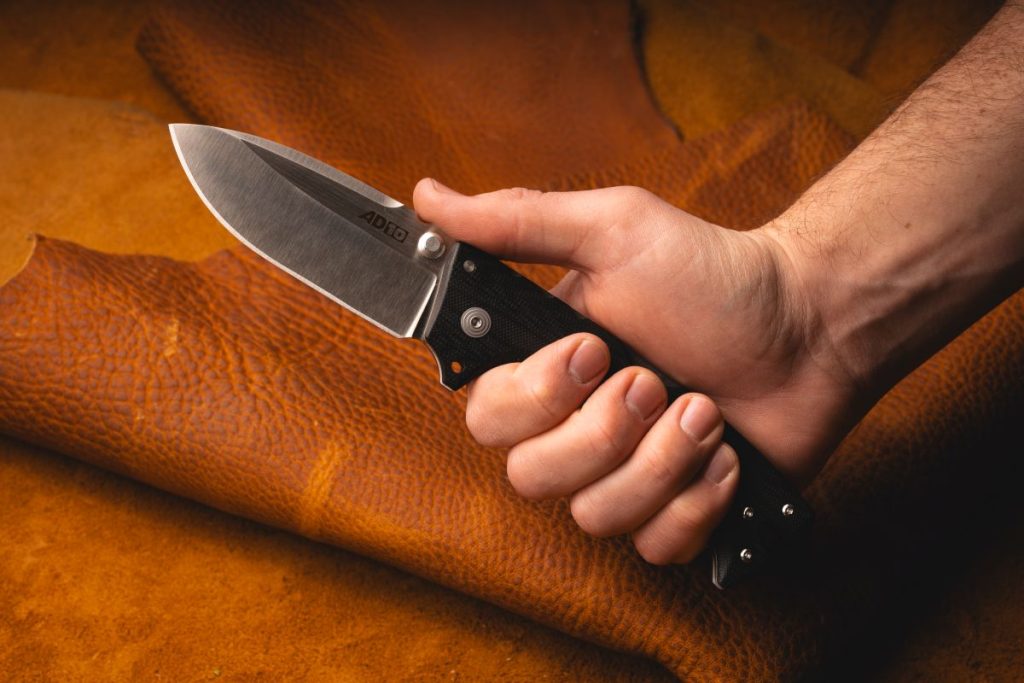
Some say it’s Cold Steel’s Tri-Ad Lock, designed by Andrew Demko. Others laud the Spyderco Compression Lock as the best, or the Benchmade AXIS Lock.
The truth is, most knife locks are strong and safe, so long as they’re properly engineered and built from quality materials.
It’s less about lock type and more about knife quality.
That being said, across the board, we’d say some lock types score higher than others, so we’ve assigned each lock type a score out of ten for strength.
The higher the score, the less likely we think it is that the lock will fail, causing the blade to close when you don’t intend.
Keep in mind that these scores are somewhat arbitrary, and the actual reliability of a lock varies from brand to brand and knife to knife.
How to Choose a Lock Type
To choose a lock type, consider the primary ways you’ll be using your knife.
Is it for everyday carry? Will you be wearing gloves? Is it for hard use?
Below is a list of some of the most common use cases, each with three recommended lock types.
EDC (Every Day Carry)
- Button Lock
- Crossbar Lock
- Button-Actuated Top Liner Lock
In Gloves
- Button Lock
- Crossbar Lock
- Lockback
Hard Use/Outdoor
- Frame Lock
- Tri-Ad Lock
- Top Liner Lock
Fidget
- Button Lock
- Crossbar Lock
- Top Liner Lock
Left-Handed*
- Crossbar Lock
- Lockback
- Shark-Lock
*Truth be told, every lock type in this article can be operated by a left-handed person. Button locks can be pressed with the index finger, and liner/frame/Compression locks can still be moved with the thumb, just the other way.
Prominent Lock Types
There are more than a few types of knife locks in 2026. The following are the best-known and best-loved.
For each lock type, we’ve included the following:
- Strength score
- Ease of use score
- Whether you have to put your fingers in the path of the blade to close it
- Whether it takes one or two hands to close
- How fun it is to fidget with
(Check out the table below to compare each lock type side by side.)
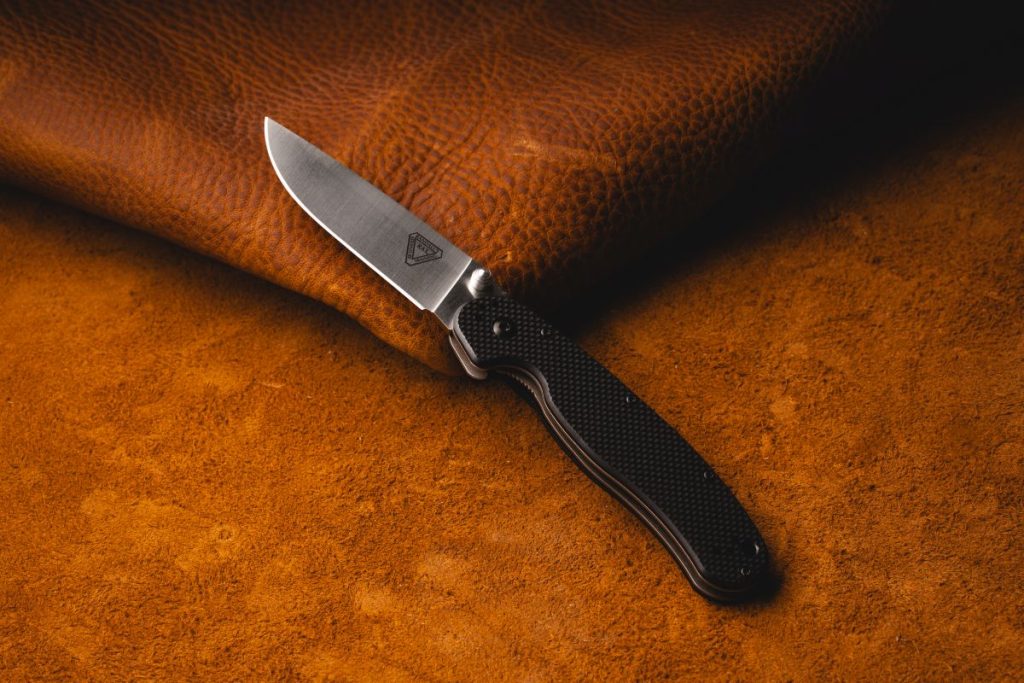
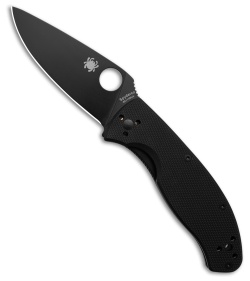
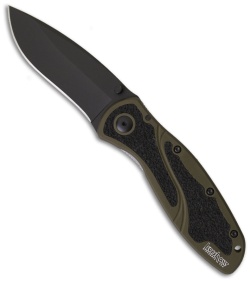
Liner Lock (Walker Linerlock)
Features:
- Strength: 7/10
- Ease of Use: 7/10
- Fingers in Blade Path: Yes
- One-Handed Close: Yes
- Fidget Factor: 7/10
How It Works: A portion of the knife’s handle liner bends into the path of the blade, wedging against the tang, and securing it open.
How to Use It: Push the bent portion of the liner out of the blade’s path with your thumb and partially close the blade. Then you can move your thumb out of the blade path and close the knife all the way.
Origin: While liner-style locks have been around for a long time, it wasn’t until Michael Walker revamped the system in the 1980s that it caught on.
These days, if it’s a liner lock, it’s Walker’s version. His version introduced such innovations as the ball detent (to keep the blade closed in your pocket) and the stop pin (for absorbing opening force).
Popular Liner Lock Knives
Carousel
Carousel-
-
4.75
-
4.75
-
5
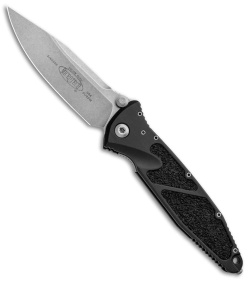
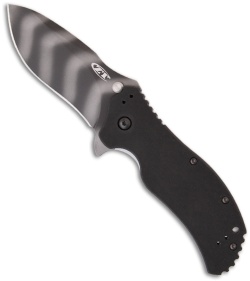 Zero Tolerance 0350TS Assisted Opening Knife (3.25" Tiger Stripe) ZTMSRP: $235.00Our Price: $196.00
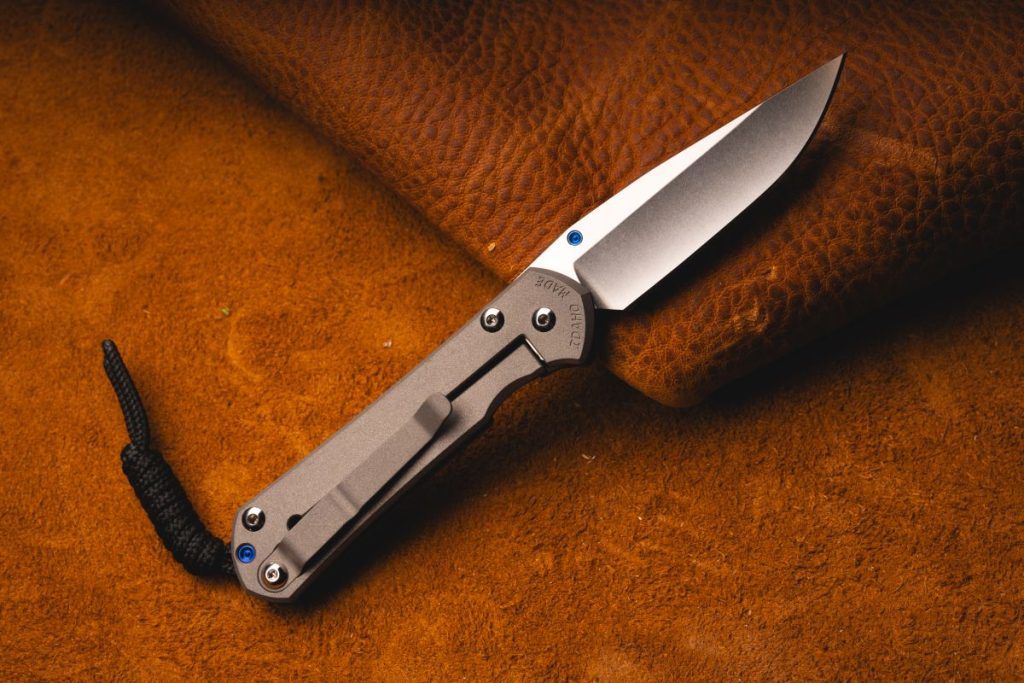
Frame Lock (Reeve Integral Lock)
Features:
- Strength: 8/10
- Ease of Use: 7/10
- Fingers in Blade Path: Yes
- One-Handed Close: Yes
- Fidget Factor: 7/10
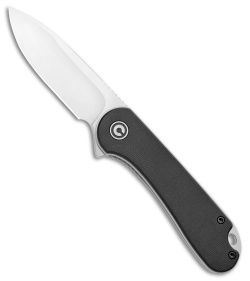
How It Works: A portion of the knife’s handle (the metal frame) bends into the path of the blade, wedging against its tang, securing it open.
How to Use It: Push the bent portion of the frame out of the blade’s path with your thumb and partially close the blade. Then you can move your thumb out of the blade path and close the knife all the way.
Origin: The frame lock was invented by Christ Reeve of Chris Reeve knives.
Reeve named it the Reeve Integral Lock (RIL), referring to the mechanism’s primary advantage over a liner lock: the lock bar is machined directly from the handle frame itself, making it more robust.
Popular Frame Lock Knives
Carousel
Carousel-
5
-
4
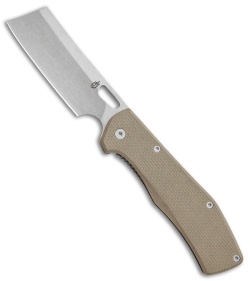 Gerber FlatIron Cleaver Frame Lock Knife Desert Tan G-10 (3.6" Stonewash)MSRP: $73.95Our Sale Price: $24.99!
 -
4.75
-
Button Lock (Plunge Lock)
Features:
- Strength: 7/10
- Ease of Use: 10/10
- Fingers in Blade Path: No
- One-Handed Close: Yes
- Fidget Factor: 10/10
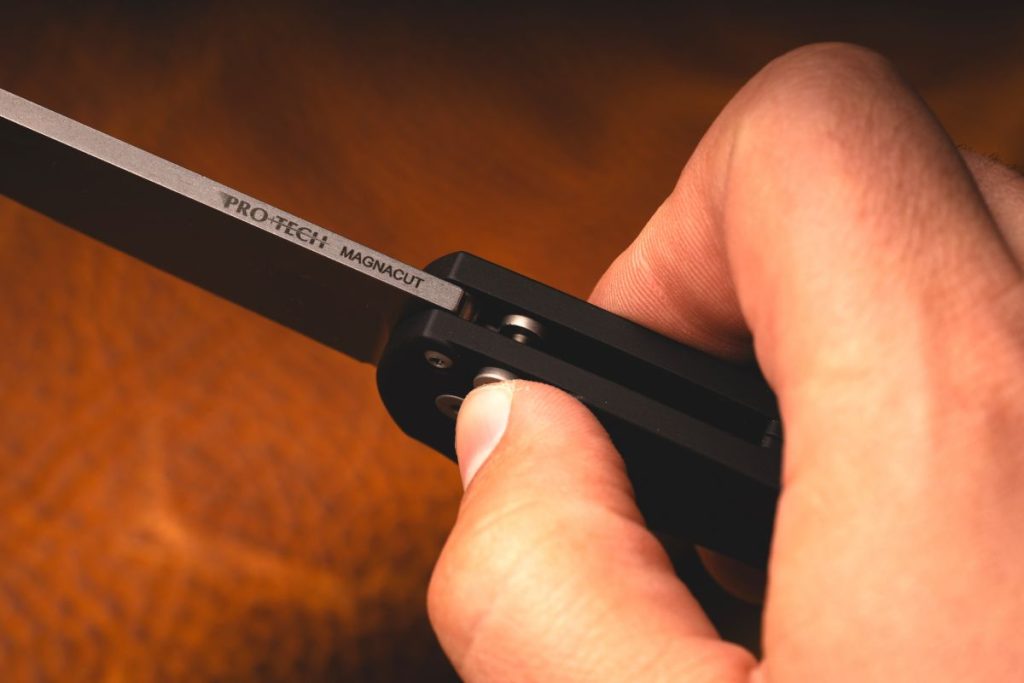
How It Works: The button is connected to a spring-loaded plunger that presses into a notch in the blade tang. Pressing the button withdraws the plunger from the tang, disengaging the lock and allowing the blade to close.
How to Use It: Push the button. It’s as simple as that.
Origin: The button lock (also called a "plunge lock") originated around the 20th century, appearing mostly on automatic knives. It served to both secure the spring-loaded blades closed and lock them open.
Button locks weren’t associated with manual folders until Pro-Tech released the Malibu in 2020.
Now, manual button lock knives are all the rage!
Popular Button Lock Knives
Carousel
Carousel-
4.5
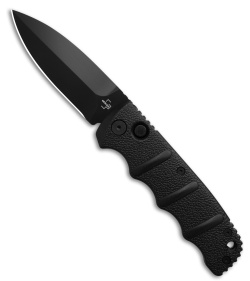 Boker Kalashnikov Dagger Automatic Knife Black Aluminum (3.25" Black D2)MSRP: $79.95Our Price: $54.95
 -
5
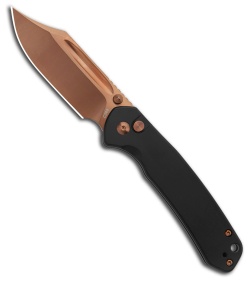 CJRB Cutlery Pyrite Bowie Button Lock Knife Black Steel (3.1" Rose Gold)MSRP: $79.99Our Price: $58.95
 -
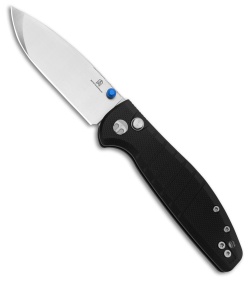 Bestechman Goodboy Jr. Button Lock Knife Black G-10 (3" Satin/SW) BMK10AMSRP: $59.90Our Price: $49.90
 -
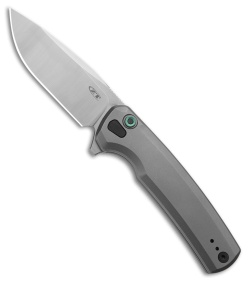 Zero Tolerance 0044 Button Lock Knife Gray Titanium (3.25" Satin) ZTMSRP: $425.00Our Price: $348.00
Crossbar Lock (AXIS Lock)
Features:
- Strength: 8/10
- Ease of Use: 9/10
- Fingers in Blade Path: No
- One-Handed Close: Yes
- Fidget Factor: 10/10
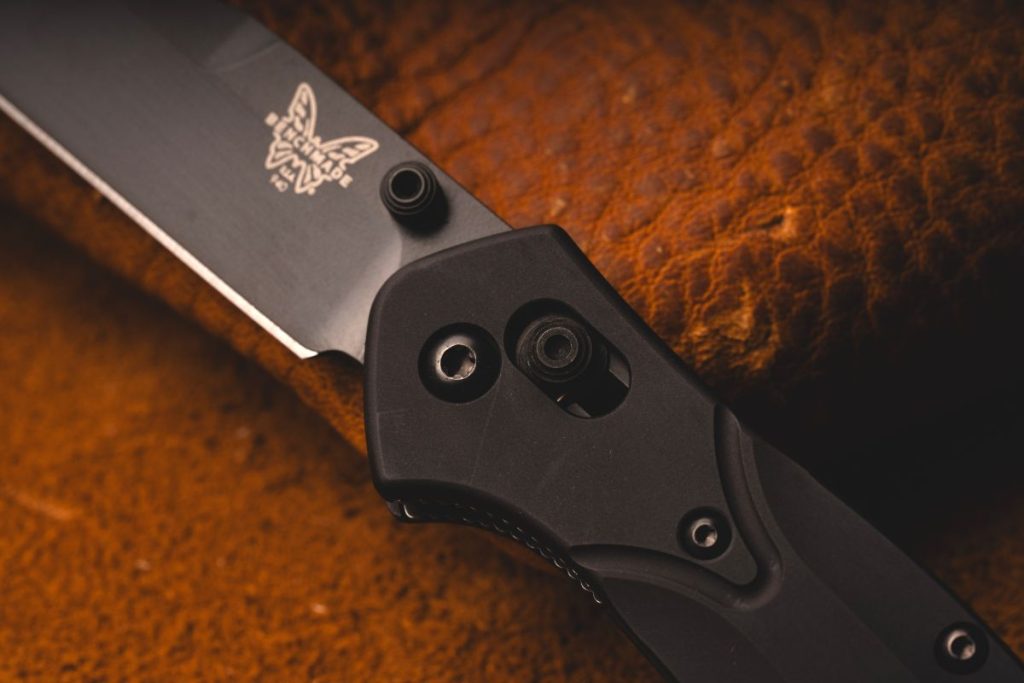
How It Works: A spring pushes a crossbar upward, wedging it between the back of the blade tang and the knife’s frame/liners, preventing the knife from closing.
How to Use It: Pinch the crossbar with your thumb and forefinger (or just use your thumb) and pull the bar down until the blade releases.
Origin: It all started in the 90s when Bill McHenry and Jason Williams set out to make a knife lock that kept your fingers out of the blade path, was ambidextrous, and was stronger than the existing options.
They presented their design to Benchmade, which acquired it and named it the AXIS Lock.
When the patent expired in 2016, knifemakers the world over began integrating crossbar locks into their folders.
Crossbar Lock Variants
The crossbar lock has more than a few variants, each with its own brand-specific name; several of them are virtually identical to the original (the Hogue ABLE Lock, SOG XR Lock, and Kershaw DuraLock, to name a few).
Others, however, stand out.
We may be stretching the definition of a crossbar lock for some of these, but the user experience is virtually identical, so we’ve classed them together anyway.
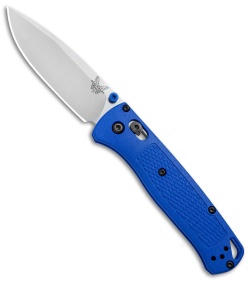
Benchmade AXIS Lock: The original crossbar lock—where it all began. It typically employs round, stepped grip pads and omega springs. There are two current exceptions to that rule: the Benchmade Narrow and Bugout Vapyr.
Each uses a torsion spring and different grip pads. (You can read all about why the torsion spring is significant in our review of the Bugout Vapyr.)
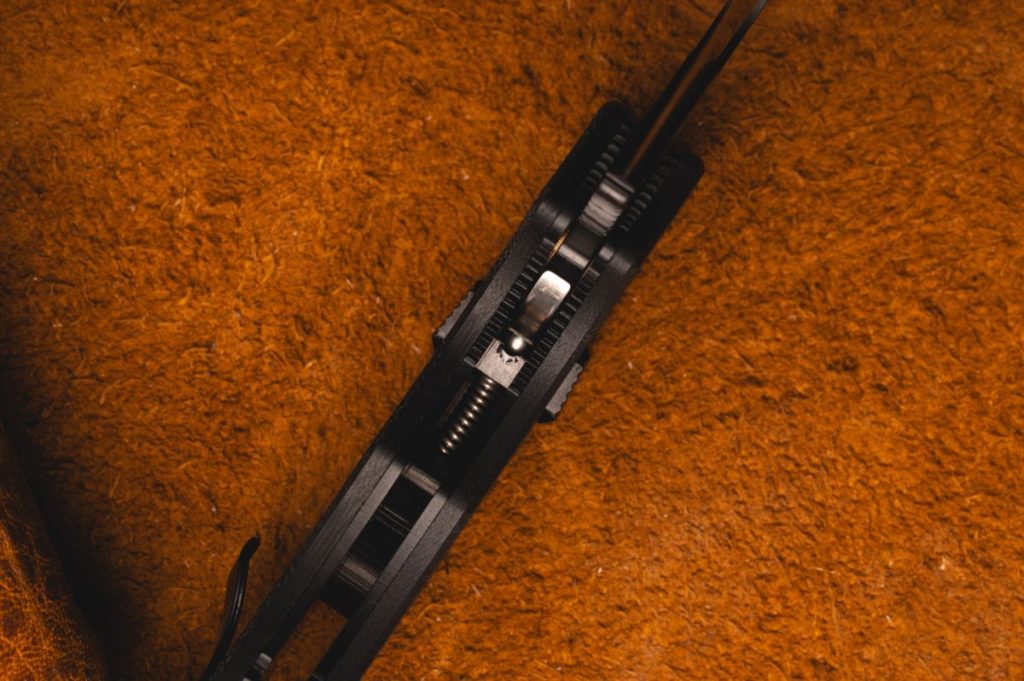
Spyderco Ball Bearing Lock: This one isn’t strictly a crossbar lock, as it uses a ball bearing instead of a crossbar.
In most cases, a polymer cage holds the ball bearing (as with the Spyderco Manix 2), but other times the ball is fully exposed (as with the Spyderco Dodo).
In each case, a compression coil spring wedges the ball up against the blade tang.
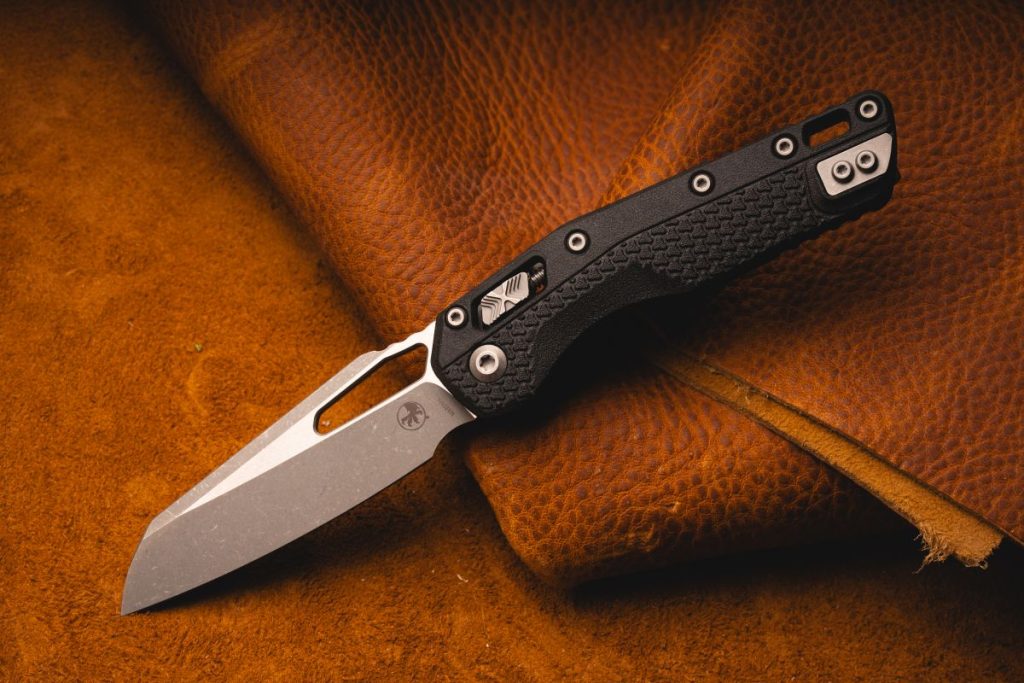
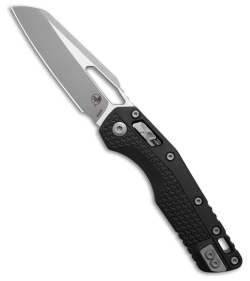
Microtech Ram-Lok: The Ram-Lok has two main features that distinguish it from a typical crossbar lock.
It uses a coil spring like the Ball Bearing Lock, and the crossbar itself is much more robust, and not really shaped like a bar. For grip, Microtech used its iconic X-Button pattern.
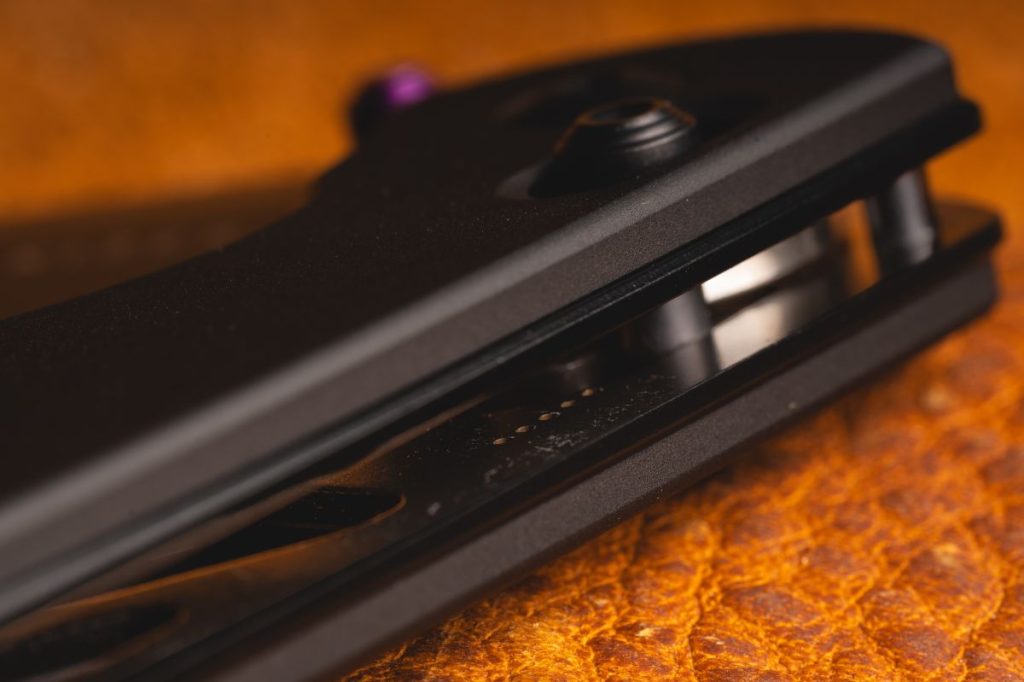
Kizer Clutch Lock: This design appears identical to the AXIS Lock on the outside, but innovation hides underneath the handle scales.
The Clutch Lock uses Kizer’s Gemini Spring System, which lets you adjust the omega springs by anchoring them at different points in the liners, resulting in variable tension. You can set it as loose or as snappy as you like!
Check out our article all about crossbar locks to learn more!
Popular Crossbar Lock Knives
Carousel
Carousel-
4.75
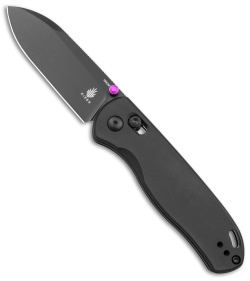 Kizer Azo Drop Bear Clutch Lock Knife Black Aluminum (3" Black) V3619C2MSRP: $158.00Our Price: $119.00
 -
4.5
Top Liner Lock (Compression Lock)
Features:
- Strength: 9/10
- Ease of Use: 8/10
- Fingers in Blade Path: No
- One-Handed Close: Yes
- Fidget Factor: 9/10
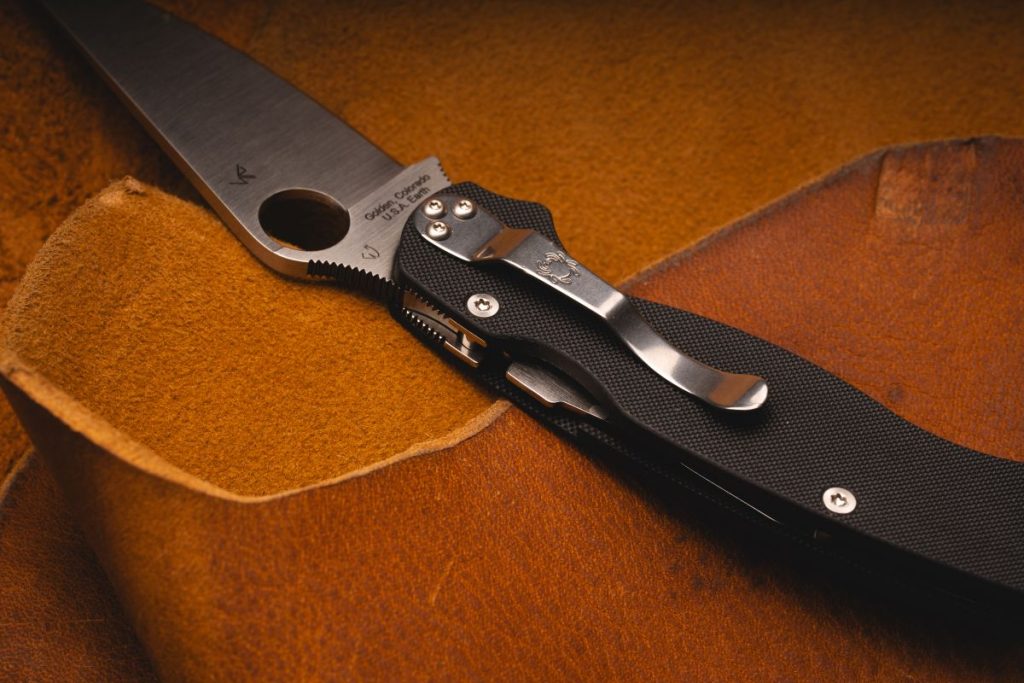
How It Works: Similar to a liner lock, a portion of the liner is bent to wedge against the blade tang; significantly, top liner locks also engage with the stop pin, dramatically increasing the lock’s strength.
How to Use It: Push the bent portion of the liner aside until it disengages from the blade tang, permitting the blade to rotate.
Origin: The Sypderco Compression lock was the first top liner lock system. It came out of a collaboration between Spyderco and Bram Frank.
Spyderco’s Sal Glesser had the lock patented, but that patent expired in 2021, so many knife companies are using similar systems today.
Top Liner Lock Variants
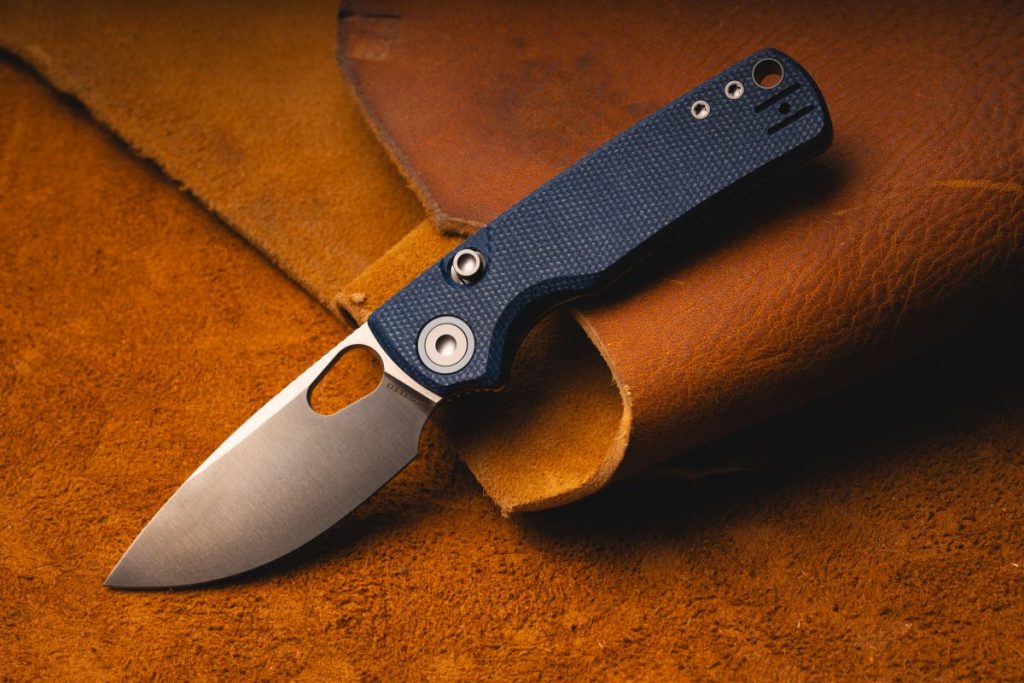
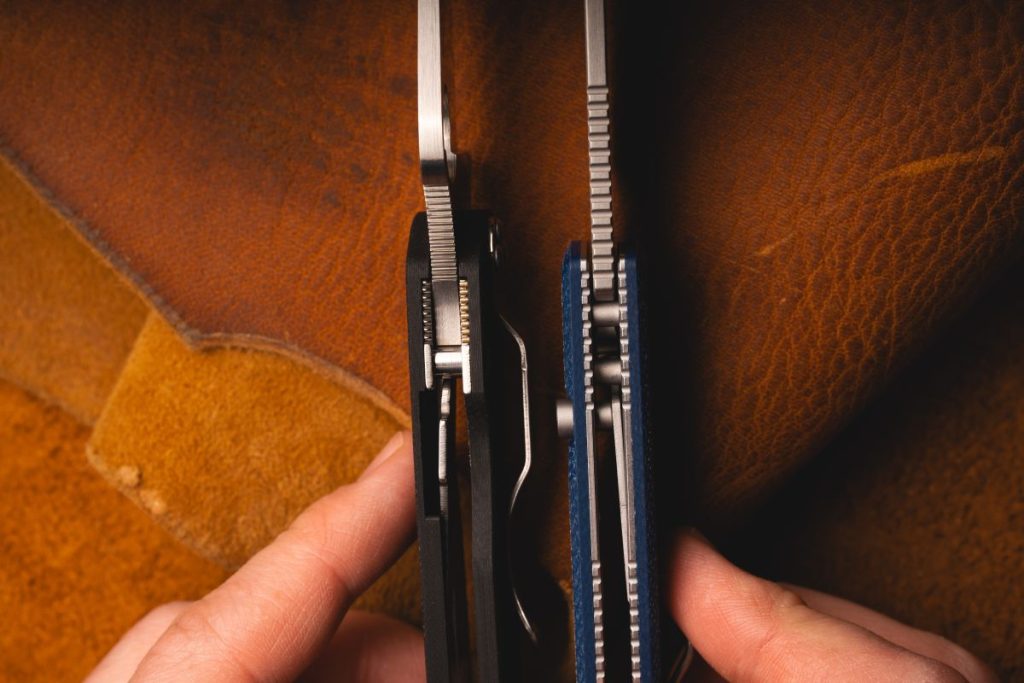
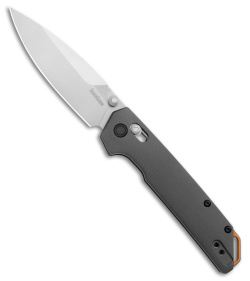
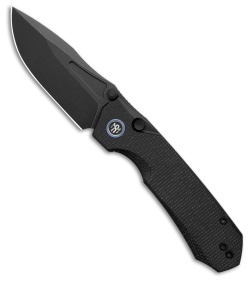
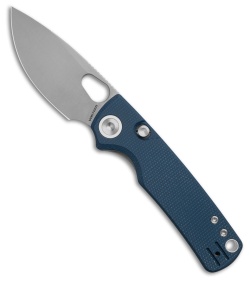
Button-Actuated Top Liner Lock (TLL): Many modern top liner lock knives operate via a button that connects to the liner, making the lock easy to disengage.
The first knife to do this was the Spyderco Smock, but brands like Vosteed and Kizer have made it a trend.
While visually similar to button locks, the mechanism is entirely distinct—though the user experience is nearly identical!
The use of a button makes these knives intuitive to understand and easy to operate, so they’re a great choice for people just getting into the hobby.
This version of the top liner lock is my pick for the best lock type overall.
Popular Top Liner Lock Knives
Carousel
Carousel-
4.75
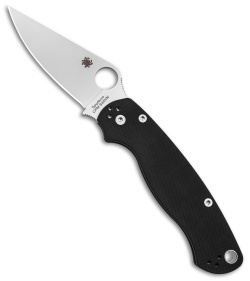 Spyderco Paramilitary 2 Compression Lock Knife G-10 (3.4" Satin S45VN) C81GP2MSRP: $279.00Our Price: $209.25
 -
4.75
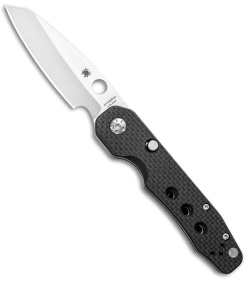
-
4.75
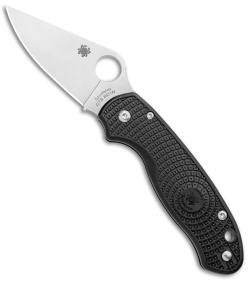 Spyderco Para 3 Lightweight Compression Lock Knife Black FRN (3" Satin)MSRP: $186.00Our Price: $139.50
 -
-
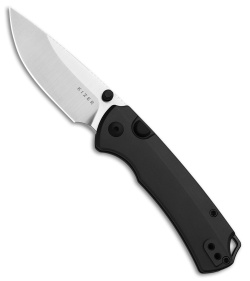 Kizer T1 BD Button Liner Lock Knife Gray Aluminum (3.2" Satin Elmax)MSRP: $141.08Our Price: $119.92
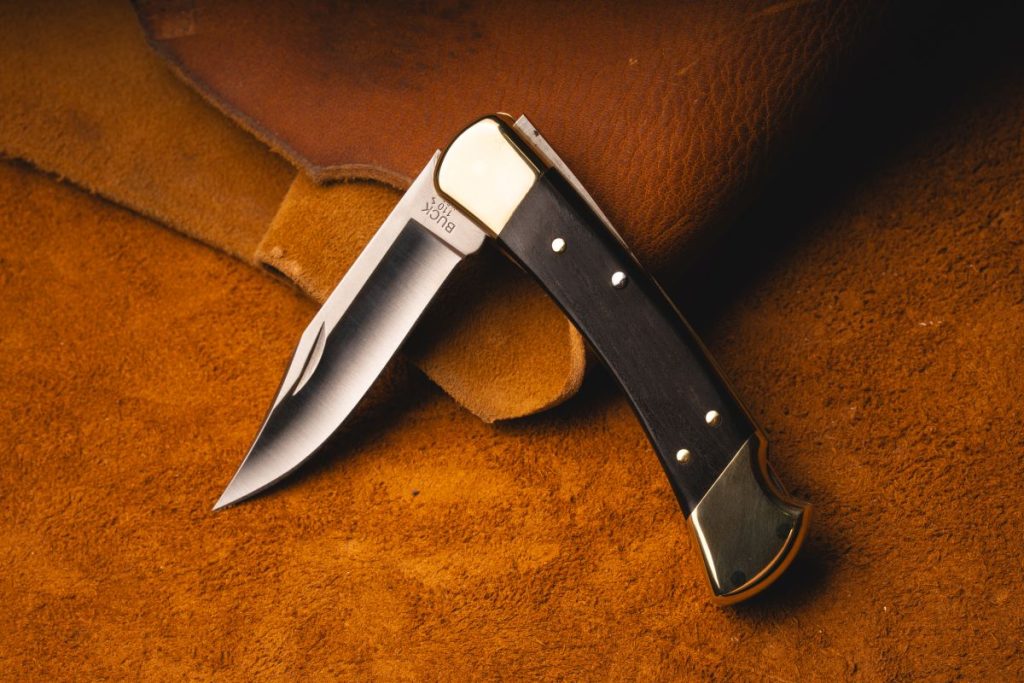
Lockback (Back Lock)
Features:
- Strength: 8/10
- Ease of Use: 6/10
- Fingers in Blade Path: Yes
- One-Handed Close: No
- Fidget Factor: 4/10
How It Works: A spring applies pressure to a pivoting bar along the knife’s spine. A nub at the end of the bar slots into a notch in the blade tang, locking it open.
How to Use It: Press down on the end of the bar to disengage it from the notch in the blade tang. Partially close the blade, then release the bar. Move your fingers out of the blade path and finish closing it.
Origin: The lockback (or back lock) as we know it today evolved from the Spanish navaja folders of the late 1600s.
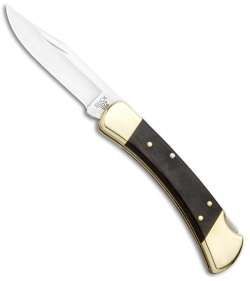
It wasn’t until Buck introduced the Buck 110 Folding Hunter in 1964 that the style exploded in popularity.
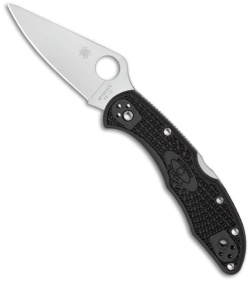
Thanks to the Buck 110, the Spyderco Delica (and similar models), and Andrew Demko’s innovations with the Tri-Ad lock, lockback knives remain relevant to this day.
Lockback Variant
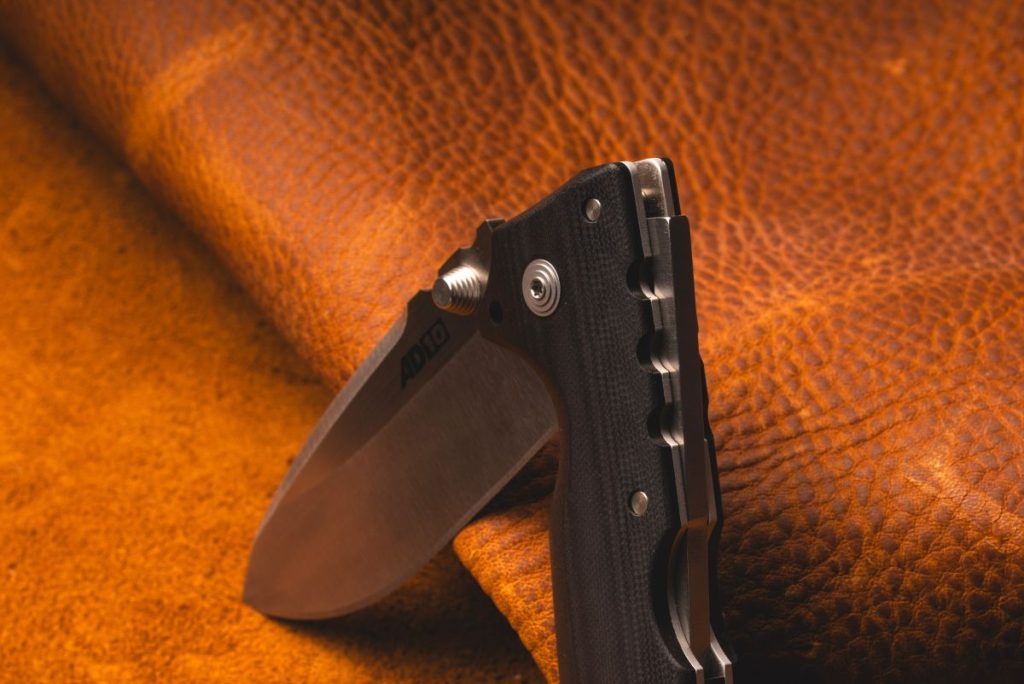
Tri-Ad Lock: Custom knifemaker Andrew Demko invented the Tri-Ad lock and partnered with Cold Steel to see it hit the market in 2010.
It’s an evolution of the lockback system that introduces a stop pin between the blade and the lockbar.
The result is a lock worthy of a 10 on strength.
Popular Lockback Knives
Carousel
Carousel-
4.75
-
4.75
-
4.75
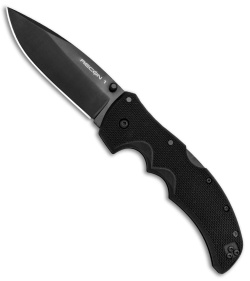 Cold Steel Recon 1 Lockback Knife Black G-10 (4" Black CPM-S35VN) CS27BSMSRP: $191.95Our Price: $139.95
 -
4.75
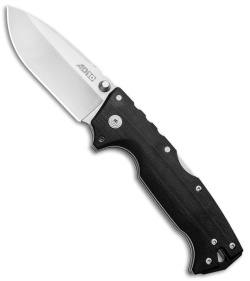 Cold Steel Demko AD-10 Tri-Ad Lock Knife Black G-10 (3.5" Satin S35VN) 28DDMSRP: $239.99Our Price: $159.95
Comparison Table: Popular Lock Types Side by Side
| Lock Strength | Ease of Use | Fingers in Blade Path | One-Handed Close | Fidget Factor | |
| Liner Lock | 7 | 7 | Yes | Yes | 7 |
| Frame Lock | 8 | 7 | Yes | Yes | 7 |
| Button Lock | 7 | 10 | No | Yes | 10 |
| Crossbar Lock | 8 | 9 | No | Yes | 10 |
| Top Liner Lock | 9 | 8 | No | Yes | 9 |
| Button TLL | 9 | 10 | No | Yes | 10 |
| Lockback | 8 | 6 | Yes | No | 4 |
| Tri-Ad Lock | 10 | 6 | Yes | No | 4 |
| Slip Joint | 3 | 10 | No | No | 2 |
Less Prevalent Lock Types
As promised, here are some less-common but still well-known lock types. We won’t go into as much detail on these.
Demko Shark-Lock
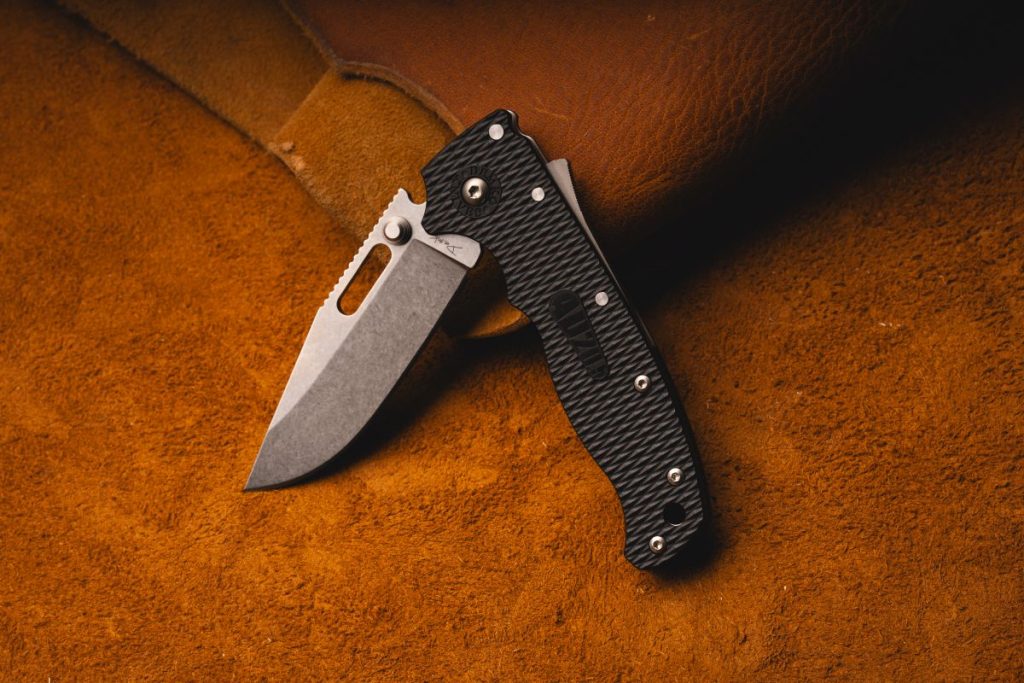
After creating the Tri-Ad lock, Demko invented the Shark-Lock.
This mechanism operates much like a crossbar lock, except that the crossbar is replaced by a spine-mounted slide that wedges against the blade tang
For all the details, check out our article on the Shark-Lock.
Similar Lock Types
- Snecx Superlock as seen on the CIVIVI Vision FG
- Artisan Cutlery/CJRB Recoil Lock as seen on the CJRB Bolt
- Cold Steel Atlas Lock as seen on the Cold Steel Mayhem
CRKT Deadbolt Lock
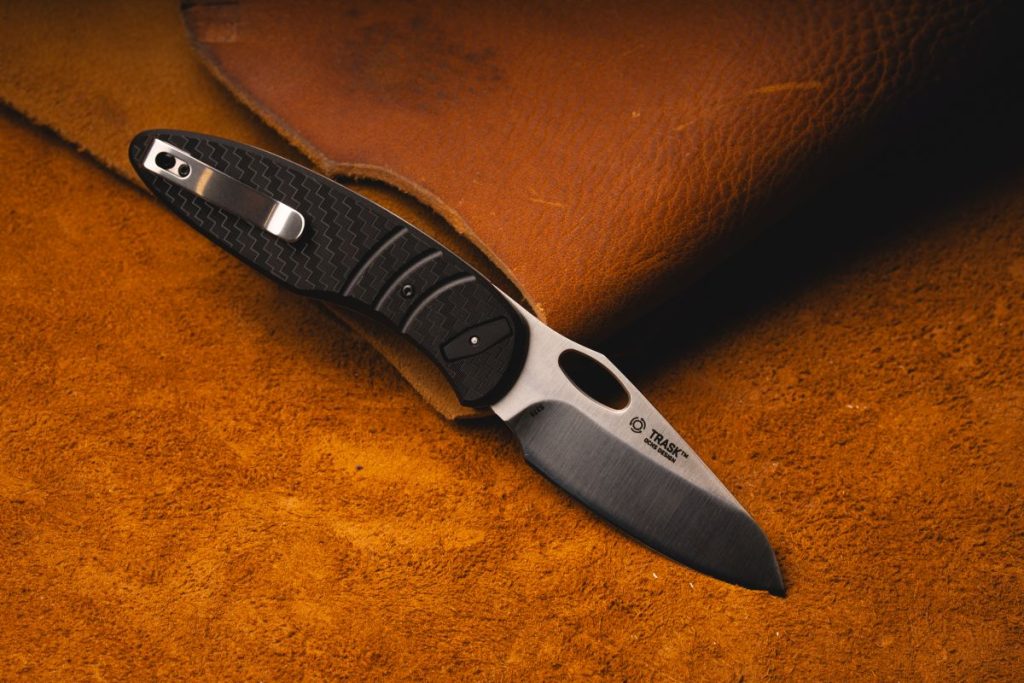
The CRKT Deadbolt lock was designed like a literal deadbolt: two solid steel rods insert into matching holes in the blade tang, firmly locking it.
To disengage the lock, simply push down on the pivot.
The Deadbolt Lock hit shelves in 2019; since then, other pivot-style locks have surfaced, each with its own unique merits.
Similar Lock Types
- Reate Pivot Lock as seen on the Reate PL-XF.
- Vosteed Vanchor Lock as seen on the Vosteed Corgi
Lever Lock
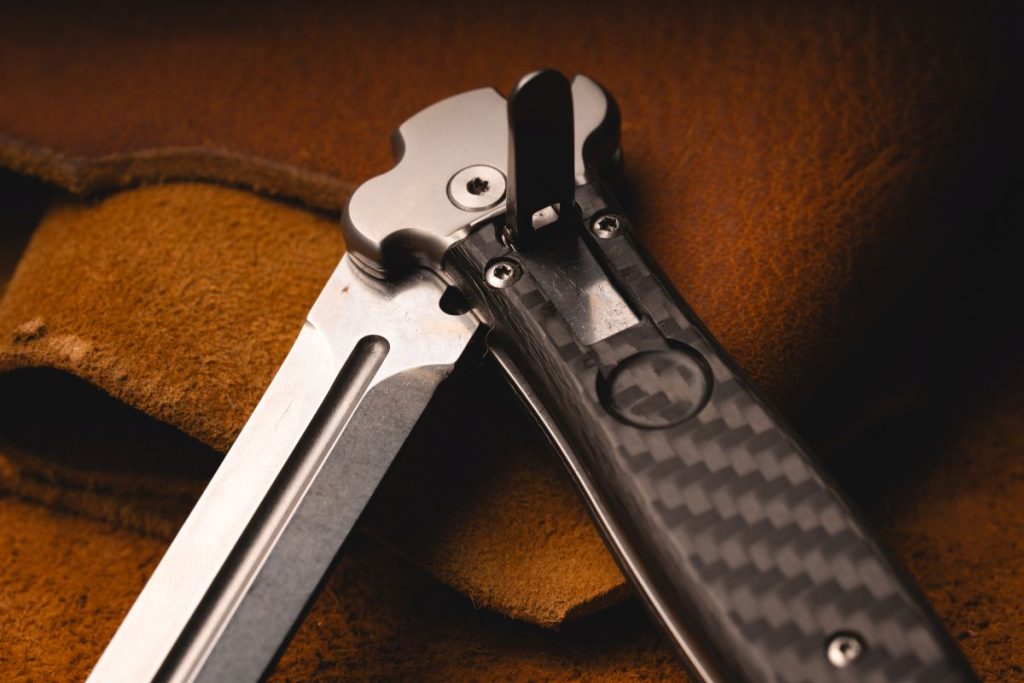
This mechanism is prevalent among Italian Stiletto-style automatic knives.
By lifting the lever and pushing it down the other side, it releases the spring-loaded blade.
The AGA Campolin Zero+ and many of the offerings from Mikov Knives are excellent examples.
Non-Locking Systems
Not all folding knives lock open. Yes, this article is on lock types, but we felt it wouldn’t be incomplete without looking at the humble slip joint (and a couple of its cousins).
Slip Joint
Features:
- Strength: 3/10
- Ease of Use: 10/10
- Fingers in Blade Path: No
- One-Handed Close: No
- Fidget Factor: 2/10
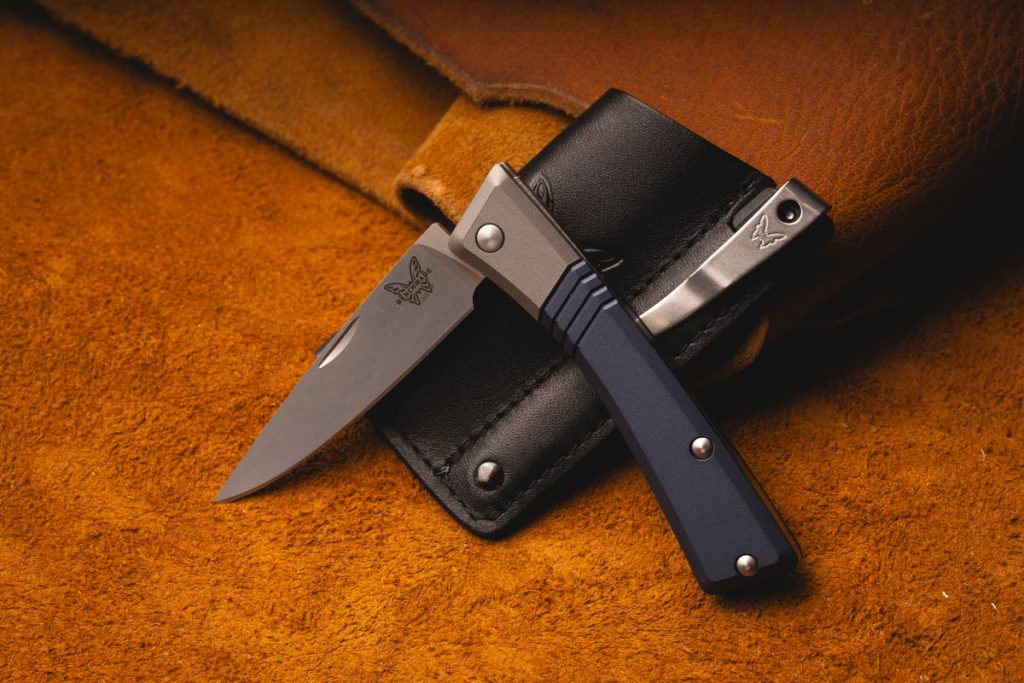
How It Works: A metal backspring along the knife’s spine applies pressure to a flat portion of the blade’s tang, holding it in place without locking it.
Sufficient force alone will cause the blade to close, as there’s no lock to disengage.
How to Use It: Ensure your fingers are not in the blade path, then apply pressure to the back of the blade until it closes.
Origin: The slip joint was born in England between 1600 and 1700. Slip joint knives were better at staying open and closed than other pocket knives of the time, so demand skyrocketed.
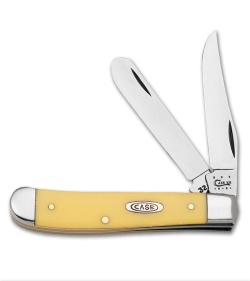
Classic patterns like the Barlow, Trapper, and Stockman arose from this boom.
Today, companies like Case Knives and Jack Wolf Knives produce top-quality products using this time-proven mechanism, and they fly off the shelves.
Why Buy a Slip Joint Knife in 2026?
With so many sophisticated blade locking mechanisms to choose from, why buy a non-locking knife?
When you factor in the safety benefits of a locking blade, one might begin to wonder at the value of such a system in 2026.
Wonder no longer:
- Knives without locking blades are legal in more places.
- A locking blade can be overkill, especially for smaller blades.
- Non-locking knives tend to be simpler with fewer moving parts that can wear and fail.
- The preservation of classic knife patterns and traditional knifemaking techniques.
Other Non-Locking Systems
Double Detent: Double-detent knives use a pair of springs with tiny ball bearings to secure the blade in the open/closed positions.
The ball bearings press into little holes in the blade tang; apply enough force to the blade, and the balls pop out of the holes, permitting the blade to swing freely.
Two advantages double-detent knives have over slip-joint folders is how easy they are to open/close one-handed and their snappy action.
Friction: The original folding knives of the ancient Roman period were friction folders. The way this "system" functions is all in the name: there’s nothing but friction keeping your blade open or closed.
Many friction folders feature extended tangs that fold into/onto the handle, so when you hold the knife, your grip helps keep the blade open.
Even friction folders have a place in today’s knife world; the popularity of Nagao Higonokami’s traditional Japanese knives proves it!
Popular Non-Locking Folding Knives
Carousel
Carousel-
-
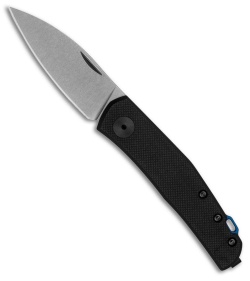 Zero Tolerance Anso 0235 Slip Joint Knife Black G-10 (2.6" Stonewash)MSRP: $200.00Our Price: $160.00
Conclusion
We wish we could name EVERY knife lock type here and compare all the stats, but this article would quickly become a textbook.
But we covered the basics and then some.
If you read all that, not only will you be able to operate nearly any folding knife you come across, you’ll be able to share a neat fact about its mechanism, too!
FAQ
What’s the best knife lock for everyday carry (EDC)?
Manual button lock. It’s intuitive to use, a joy to fidget with, and reliable.
What’s the safest knife lock for beginners?
Manual button lock. Many lock-related injuries come from an improper understanding of locking mechanisms. The button lock is the simplest to understand: push the button, close the blade. And unlike liner locks and frame locks, you never need to put your fingers in the blade path while closing it.
Which knife locks are easiest to close one-handed?
Crossbar lock (AXIS Lock). It can be done with your right or left hand, cloved or ungloved, with a single, simple motion. A manual button lock is a close second.
What’s "lock stick" and how do you fix it?
Lock stick it when the lock mechanism gets stuck, often requiring more force than normal to disengage. Some solutions include: adjusting pivot screws, applying graphite (pencil lead) to lock mechanism where it meets the blade tang, and sending your knife in for warranty service. Notably, some lock stick (specifically on new knives) will go away as you break the knife in.
Which knife locks are truly ambidextrous?
If by "truly ambidextrous" you mean "mechanically symmetrical," then here’s a list:
- Atlas Lock
- Crossbar Lock (and all variants, including the Ball Bearing Lock)
- Lockback
- Shark-Lock
- Super Lock
- Tri-Ad Lock
Which lock types handle dirt, sand, or pocket lint the best?
Lockbacks, frame locks, and liner locks all do a great job of functioning while inundated with sand or lint, and they’re easy to clean.
What’s the difference between a frame lock and a liner lock?
Functionally, they’re nearly identical. The difference is in the knife construction: a frame lock constitutes a portion of the handle (the knife’s "frame"), while a liner lock sits within the handle.
What’s the difference between a button lock and a top liner lock with a button?
The button on a button lock (or plunge lock) knife pushes aside a plunger that’s wedged into the blade tang. The button on a button-actuated top liner lock moves aside the bent portion of the liner that’s interfacing with the blade tang and stop pin.


 Copyright © 2026 Blade HQ. All rights reserved