Pocket Knife Maintenance Guide


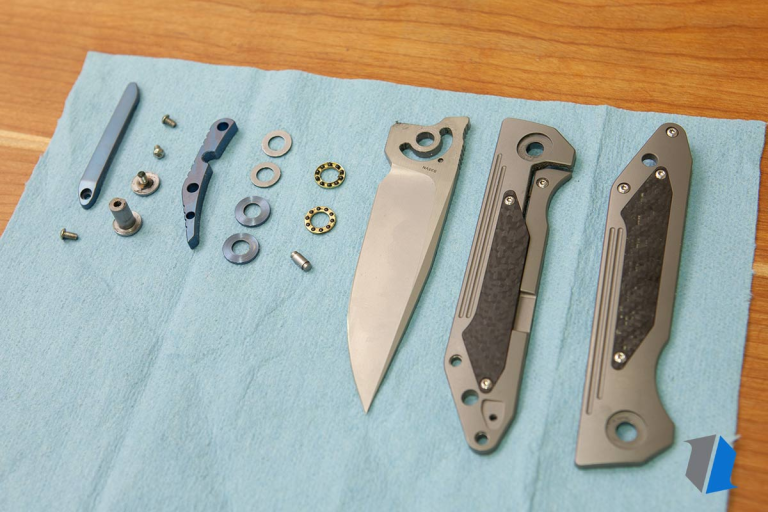
In This Guide
- Things to Know Before We Start
- Knife Maintenance Tools
- How to Maintain Your Knife
- Still Have Problems?
- Maintenance Without Disassembly
- FAQ
Just like any tool, your pocket knife needs occasional maintenance to stay in tip-top shape.
This article will help you know what tools you’ll need, how to take care of your knife, and when you might need a little extra help.
Let’s jump in!
Things to Know Before We Start
- Knife maintenance is about keeping your knife safe and operational. It’s not about babying your knife when it doesn’t need it.
- This article assumes you have a knife that is dull, filthy, and neglected. Your knife might not need everything shown here.
- Feel free to break the rules below however you need to. Knives are all about self-reliance, ingenuity, and just getting it done!
- Some companies will void your warranty if you disassemble your knife. It’s worth checking on that before you break out the drivers!
- If you don’t want to disassemble your knife, we have a lite maintenance guide at the end of this article.
- If you need help with a specific knife, there’s a good chance someone’s made a YouTube video about it. That could be worth checking out when you’re done here.
- If you want to know how to maintain your OTF automatic knife, check out our OTF Knife Maintenance guide.
Knife Maintenance Tools
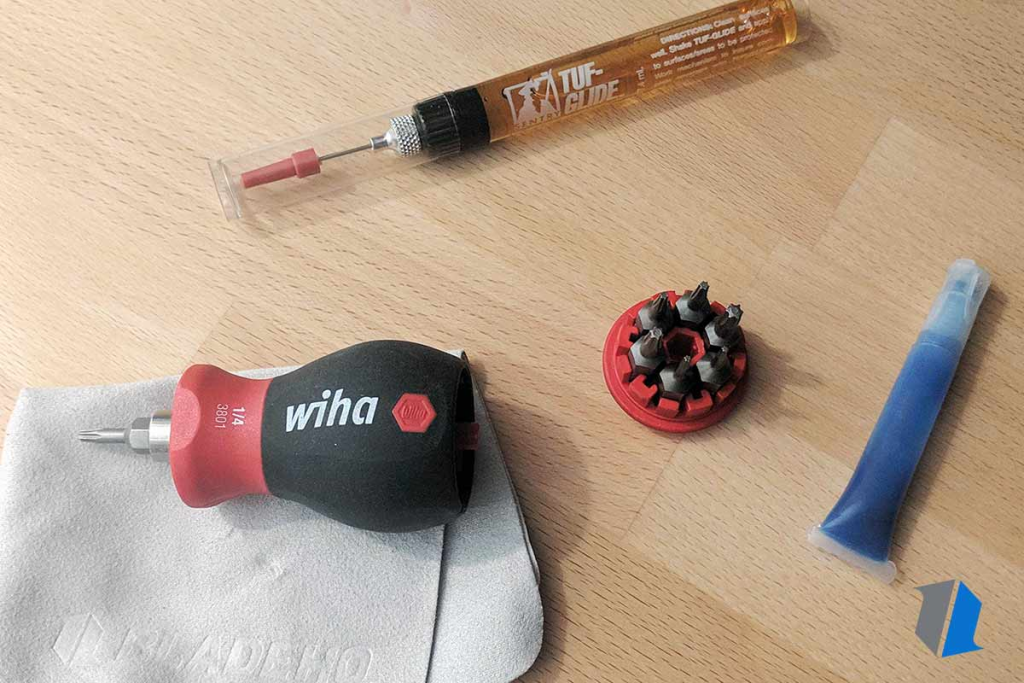
There I’ll divide these into three categories: Essentials, Nice-to-Haves, and Might-Wants.
Essentials
- Sharpener – every knife eventually goes dull (assuming you use it). A sharpener you know how to use is the most important tool in your kit.
- Screwdrivers – Many knives have lots of little screws, often with uncommon bits. But you usually don’t need more than a simple quarter-inch bit driver and a selection of small TORX bits.
Nice-to-Haves
- Lubricant – Keep your action running smoothly. The lubricant you pick is a matter of preference.
- Thread Locker – Keep your screws locked down tight. Be sure to use blue thread locker—the red stuff is really hard to unscrew.
- Work Mat – A place to work that can securely hold tools, parts, and tiny screws.
- Polishing cloth – Use it to clean off dirty parts, polish fingerprints off the blade, dust out the inside of a knife, etc.
Might-Wants
- Plastic Wedge – some knives fit together tightly and are a bit stubborn to take apart, and a wedge can help. Looking at you, Spyderco PM2 lanyard tube!
- Specialty Bits – a few knife companies (mostly Microtech) use proprietary hardware on some knives, which may require you to find the right bits to work on them.
- Assembly helps – complicated knife mechanisms can be made easier to work on if you have certain tools. For example, crossbar locks are much easier to assemble if you have a pivot tool.
If you’re missing some or all of these tools, check out our Knife Care Kit to get started! The kit comes with a microfiber cloth, some pivot lube, and blue thread locker.
We also sell other screwdrivers and tool kits to meet your needs!
How to Maintain Your Knife
Step 1: Disassembly
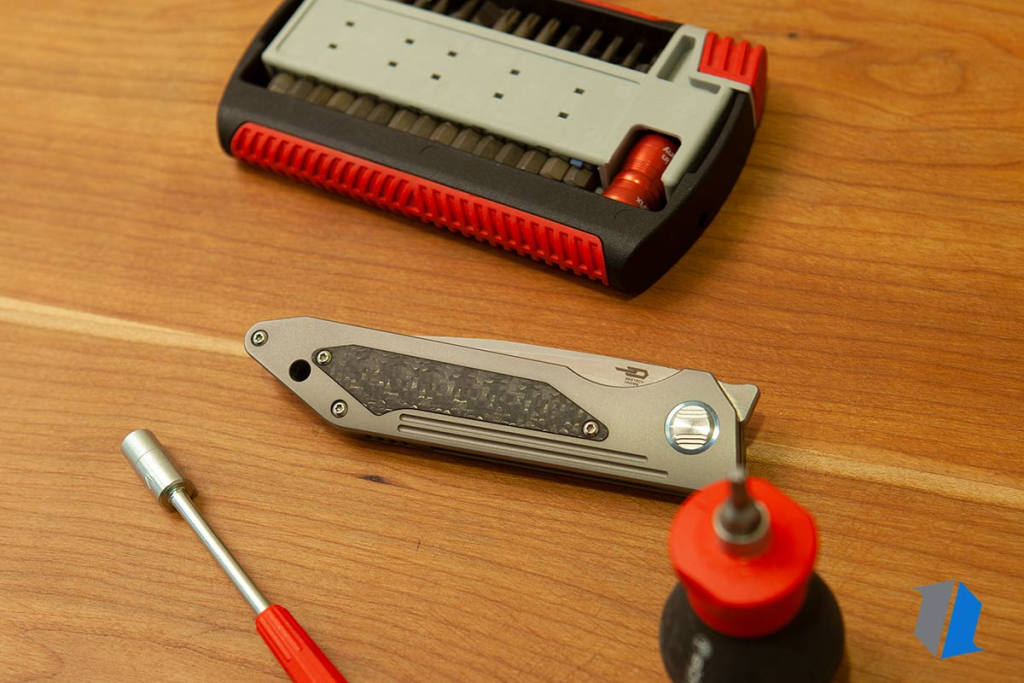
Most problems with a pocket knife are found inside the handle. Taking it apart will make solving the problem much easier. Start by making a plan.
- What specific tools and bits will you require to disassemble? Make sure you have them close by! Leaving a partially disassembled knife alone while hunting for tools is recipe for lost parts!
- Which screws will you remove? Where will you put them while they’re not in the knife?
- You often don’t need to take out every single screw; only the ones involved in a moving part or an especially dirty mess.
- In what order do parts come apart and go together? If you don’t pay close attention to this, reassembly may prove difficult.
Once you have a plan, carefully disassemble your knife. Find a YouTube video on your specific knife if you want to be safe. Place everything in a safe place until reassembly.
Step 2: Cleaning
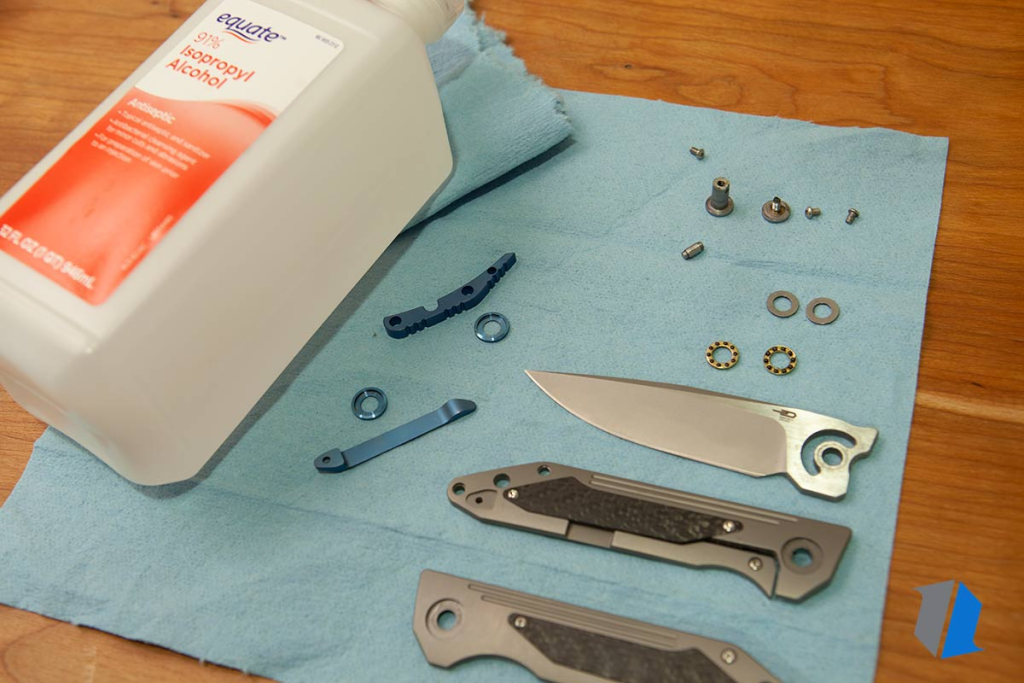
Pocket knives collect dust, lint, oils, juices, and all kinds of other gross stuff. Using a paper towel, microfiber polishing cloth, or whatever you’ve got, clean the knife out as best you can:
- Don’t be afraid to scrub with soap or solvents if needed. Knives are made mostly of inert metals and can take a bit of elbow grease.
- Take care not to bend or kink any washers. The knife won’t feel right afterward if you do.
- Do all of your cleaning in a bowl, lest you lose tiny parts down the sink.
- Remove any sticky residue (tape scum) from your blade with alcohol.
At this point, some people like to sharpen their blade while it’s out of the handle, but that’s up to you. If you’d rather wait, once the knife is squeaky-clean, you’re ready to move on!
Step 3: Reassembly and Lubrication
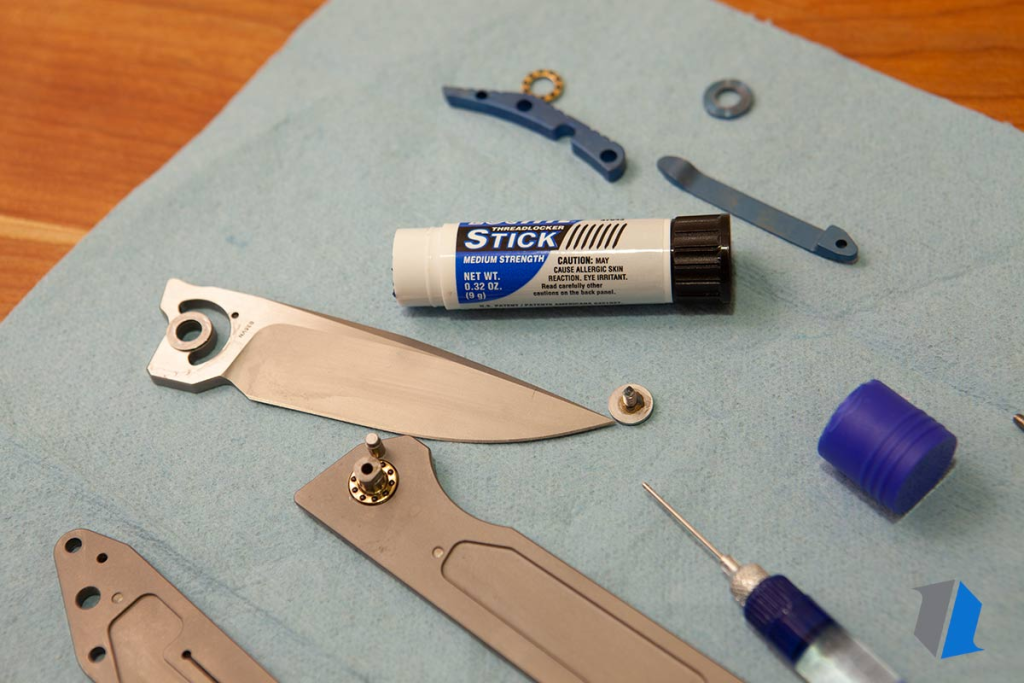
Put the knife back together in reverse order of how it came apart, and make sure it’s oiled and running smoothy:
- While you put the pivot back together, put a tiny drop of oil between each part in the pivot. Once the knife is assembled, wipe off the excess.
- Don’t focus so closely on the pivot that you forget to put the spacers in!
- If you get lost in the assembly process, find a video or a knowledgeable friend who can help you.
Step 4: Tuning
Tuning sounds complicated, but it’s just tightening and loosening your pivot screw to manage how loose your blade action is. It’s a simple three-step process:
- Tighten your pivot all the way down. The knife should be very difficult to open, if you can open it at all.
- Loosen the pivot just a tiny little bit, and try your action. Is it still too tight, or is it just right?
- Repeat step 2 until your action is right where you want it.
Now all there’s left to do is sharpen!
Step 4: Sharpening
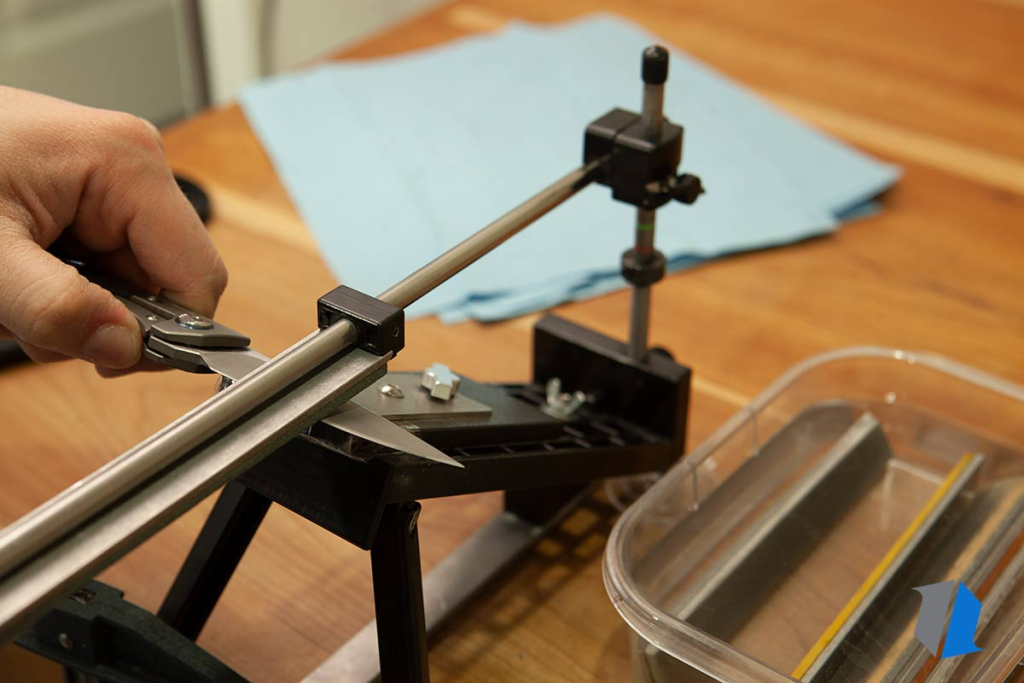
Using whatever sharpener you like best, put a nice edge back on your knife.
If you need help with your specific sharpener, check out your sharpener’s company on YouTube. You’re likely to find a tutorial for your exact sharpener.
For more information on sharpening, reference our Knife Sharpeners: Everything You Need To Know article.
Once your knife is sharp, you’re done! Your knife should now be opening, closing, and cutting like new!
Still Have Problems?
If your knife doesn’t use conventional hardware, uses an especially complex mechanism, or has a weird problem you can’t fix with the above steps, it’s time to contact your knife’s maker for warranty service.
Usually, you’ll need to fill out a form and ship your knife to the factory. The company will either fix the problem send you the fateful news that your knife cannot be repaired.
If your knife is broken due to misuse, the manufacturer may charge you for the repairs.
Maintenance Without Disassembly
If, for whatever reason, you don’t want to disassemble your knife, here are some steps you can take to freshen it up:
- Blow dust/lint out of the handle with a can of air or a sharp blow from your mouth.
- Swab the inside of your knife with a cotton swab/Q-tip.
- Apply a small drop of oil to either side of your blade pivot and the moving parts of the locking mechanism.
- Tighten/loosen the pivot to your preference.
- Remove any sticky residue (tape scum) from your blade with alcohol and sharpen it as usual.
All Done!
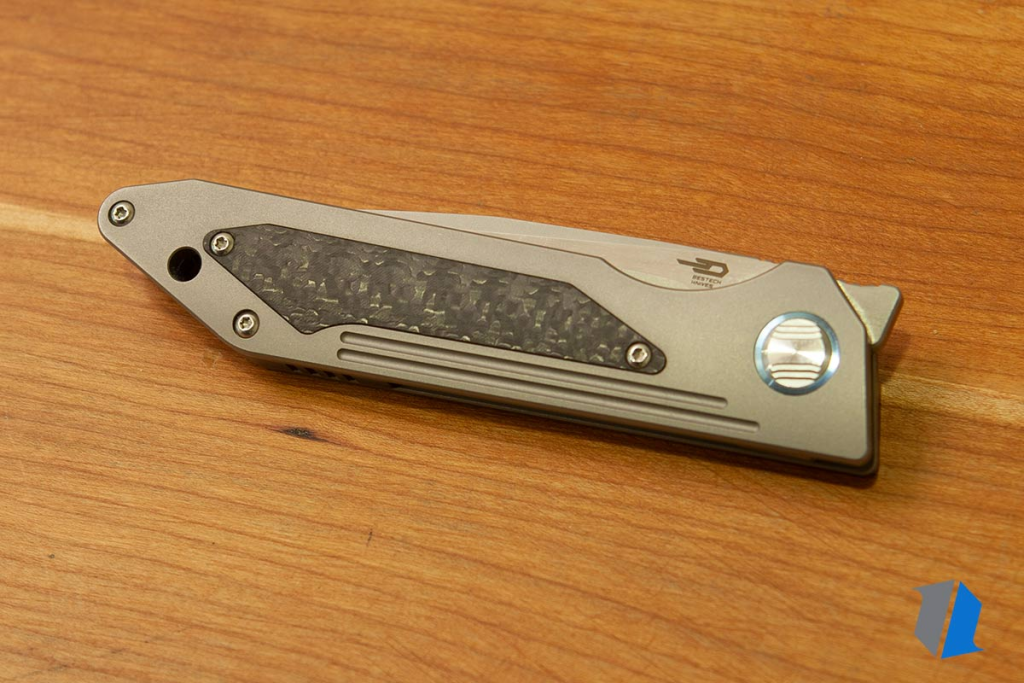
With only basic tools and an hour or so of effort, you can take even the crustiest of knives from zero to hero.
It’s good fun, and a great litmus test for other maintenance jobs!
If you can take apart, clean, oil, and reassemble a knife, you’ll have no trouble learning to change a car’s oil, a furnace’s air filter, a sink’s garbage disposal, and more.
You’ll be able to use your own skills and sweat to solve your own problems.
Isn’t that what knives are all about?
FAQ
How often should you clean a pocket knife?
Clean it whenever dirt, lint, moisture, or residue affects the action. Frequently carried knives may need a thorough cleaning every couple months.
What’s the best oil for a pocket knife?
Use a lightweight knife or tool oil. Choose a food-safe lubricant if the blade may contact food.
Can you use WD-40 on a pocket knife?
WD-40 works well for loosening grime and displacing moisture, but it isn’t ideal as a long-term pivot lubricant. It’s usually best to use a specialized knife lubricant.
Do you need to disassemble a pocket knife to clean it?
Not always. Compressed air, a cotton swab, and a microfiber cloth can handle routine cleaning. Some issues will require disassembly to fix, however.
Will disassembling a pocket knife void its warranty?
It may, depending on the knife’s manufacturer. Check the knife’s warranty before taking it apart.
How do you remove rust from a pocket knife?
Apply a rust remover or light oil and gently scrub the affected area with a nonabrasive cloth or very fine abrasive. Clean, dry, and protect the blade afterward.


 Copyright © 2026 Blade HQ. All rights reserved