





Leatherman ARC Review – After a Year of Use


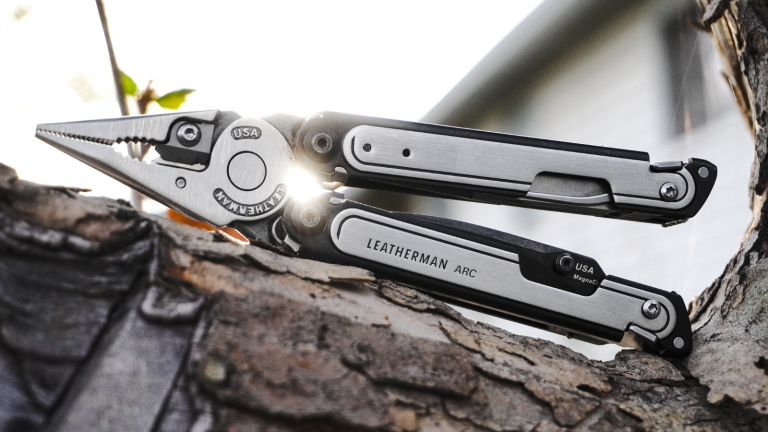
My knife journey began with Leatherman. As much as I love knives, there will always be a soft spot in my heart for the humble multi-tool that started it all. But in 2023, the Leatherman ARC came out. To me, it felt like the knife guy’s perfect multitool. In fact, I had a hunch that it might replace the knife in my pocket completely.
So, in my ongoing effort to be a free thinker, I got myself a Leatherman ARC about a year ago and have carried it almost every day since to see if my knives have anything to worry about. In this review, I’ll cover its features, what was good, what wasn’t my favorite, and who this tool is for.
Product Considerations
Materials
The Leatherman ARC shares a lot with other Leatherman products: stainless steel tools (for the most part, more on that later) and a steel handle. The glaring exception to this rule is the blade, which is also one of its biggest selling features. Instead of the typical 420 blade steel found on its brethren, the Leatherman ARC has a CPM MagnaCut blade with a DLC (Diamond-Like Carbon) finish. We have an entire article on why MagnaCut is cool, but the short of it is that it has great edge retention, corrosion resistance, AND toughness, when most blade steels make you pick two of the three. Very nice!
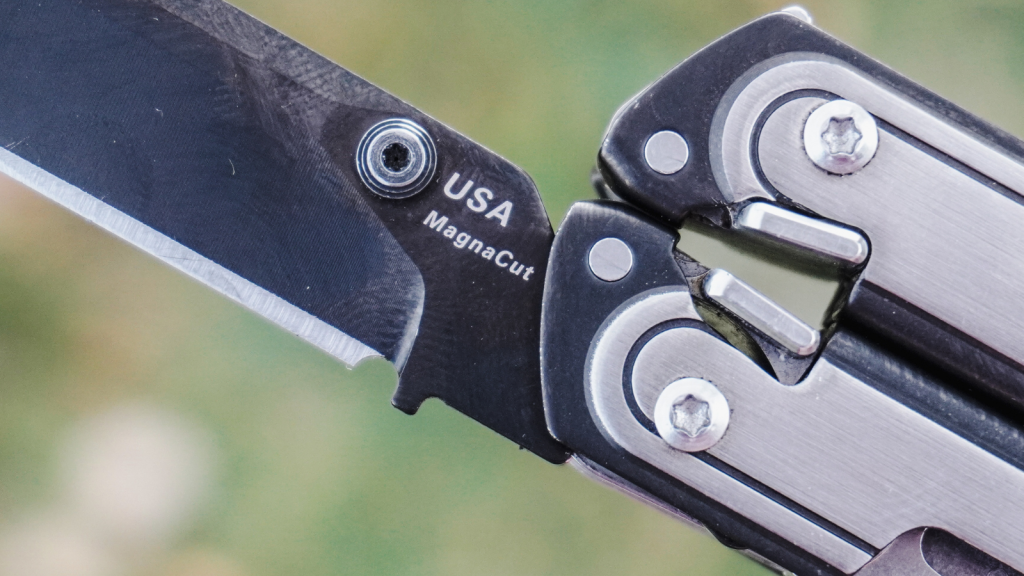
MagnaCut has found its way onto knives all throughout the industry, and it’s loved because of its extreme corrosion resistance. That’s why it’s all over the Spyderco Salt series as well as the Benchmade Water line. But remember, some of the tools on the ARC, including the lock bars and plier jaws, are made of a grade of steel that’s a little more susceptible to rust. I carry mine every day and oil it regularly, but I still see the occasional spot of rust on some of the tools. This makes me wonder why Leatherman didn’t opt for more stainless steels for their tools, especially because stainlessness is the biggest selling feature of the blade steel, which is the biggest selling feature of the tool.
But that’s extraordinarily nitpicky. I still love my ARC—if I lost it, I’d buy another.
Aesthetics

All in all, the ARC looks like a Leatherman. Leatherman was never made to win a beauty contest, but it looks fine. I do like the black and satin combination; I think it’s more pleasing than the solid silver look of many other Leatherman tools. Good job, Leatherman!
Ergonomics
Leatherman was built on the idea that you can have multiple tools inside a single gadget, but that comes with a tradeoff. Screwing with a Leatherman screwdriver will never be as nice as doing so with a dedicated screwdriver; the same goes for cutting with the knife, pinching with the pliers, and prying with the bottle opener. The most painful spots are the corners of the handle. If you’re bearing down on the blade for a hard cut, you will feel it in the webbing of your thumb. But once again, it’s trying to be more than a dozen tools in one. It’s never going to be perfect.
Build Quality
The ARC has as good a build quality as any multitool I’ve held before. It’s common to feel a bit of squish in the different parts of a Leatherman, and you find it here. If you squeeze the pliers really hard, you’re going to feel bend in the pivots. If you’re expecting the rock-solid wall you hit with a quality pair of pliers, you won’t find it on the ARC—but you won’t find it on any other multitool either.
Key Features
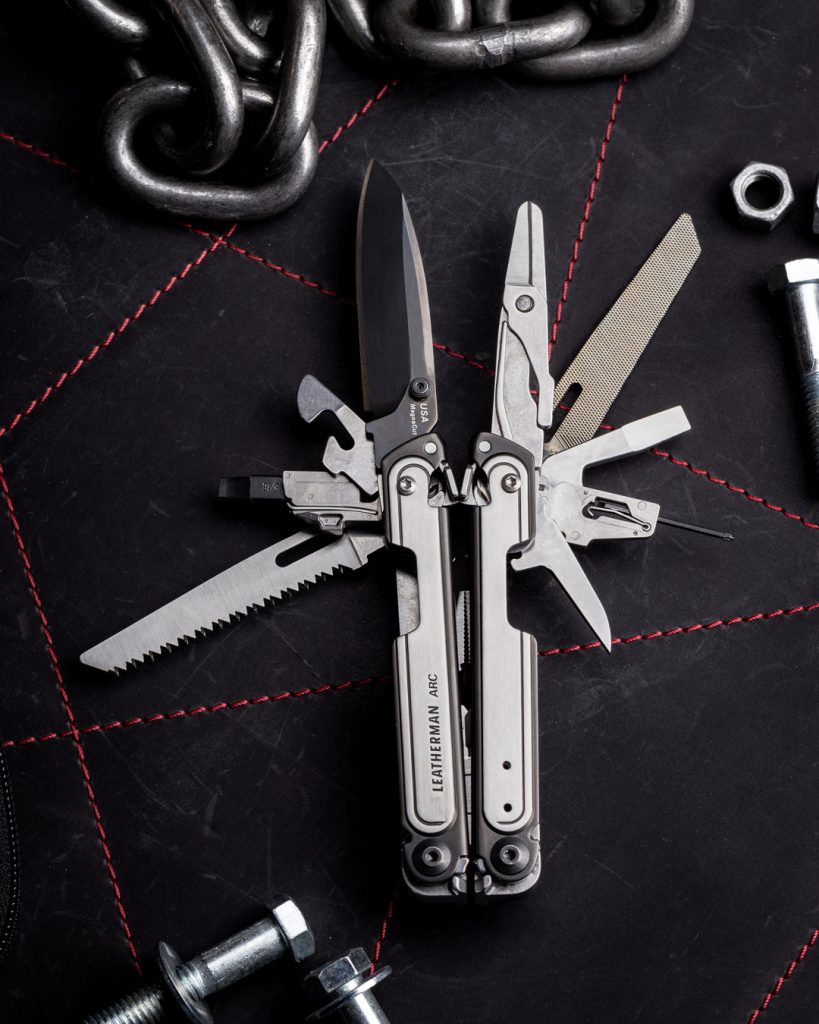
The Leatherman ARC is advertised as having 20 tools. I’ll do a quick, one(ish)-sentence review of each of them.
1 – MagnaCut Blade: It’s stayed sharp, and I love the locking mechanism, but the handle isn’t super comfy for long cutting sessions.
2 – Needlenose Pliers: Quite a bit thinner in the tip than many other multitools, good for most jobs I had.
3 – Regular Pliers: Good grip on smaller things, a bit small for larger bolts and other things.
4 – Bit Driver: The bits are proprietary, but well made. I love that it came with multiple bits.
5 – Diamond-Coated File: Great for fingernails and sharpening other tools. A Leatherman classic, and I’m glad it’s here.
6 – Small Bit Driver: Useful for my glasses and other things with tiny screws.
7 – Wood/Metal File: Nice and sharp, but too small to do work quickly. I only used it for realigning a bent arrow tip.
8 – Pry Tool: Nice and thick, does a good job.
9 – Replaceable Wire Cutters: Cuts well. No problems.
10 – Replaceable Hard-Wire Cutters: Cut well enough, but there’s a problem (kind of) we’ll discuss later.
11 – Impact Surface: I wish every Leatherman had this; it’s an absolute game changer. Used it most of any tool.
12 – Large Screwdriver: This is literally the same tool as the Pry Tool. I think it’s a bit cheap to call it its own tool. Drives large screws.
13 – Bottle Opener: Opens bottles as open as any bottle I’ve ever opened with any bottle opener!
14 – Can Opener: Opens cans! I wish it was a bit sharper, but it gets the job done.
15 – Awl: Unfortunately, it’s not a stitching awl, but it’s sharp and pointy, great for woodwork, and I love that it comes out the opposite side of the strike surface. That makes pounding it easy!
16 – Spring-Action Scissors: Great for snipping stuff, and surprisingly robust. Also the best fingernail clippers the world has ever known. Probably the second-most used tool in my experience.
17 – Saw: Short but cuts fairly fast. Great for scraping ferro rods.
18 – Wire Stripper: I’m sure it works, but I never had reason to use it.
19 – Electrical Crimper: It crimps! I only used it on an end for a bike cable, and it worked just fine.
20 – Edge File: It’s there but I never really use it. Good to have, though!
One Handed Opening: Leatherman’s FREE Technology
The last thing I want to talk about is the FREE Technology. This system allows you to access any implement on the tool with one hand—well, kind of. I’m right-handed, and I can get to everything one-handed pretty easily, except the saw and the scissors. They can’t be pushed half-way open by your thumb, so you must, for lack of a better word, Spidey-flick them open, which is hard because your hand is partially depressing the lock. You can do it, but it’s pretty hard. Other than those tools, however, the entire tool is one-hand operable!
Functionality and Performance
Every tool on the ARC did the job it set out to do. None of them is better than a dedicated tool, but it’s incredible that I can have all that functionality on my hip every single day. That’s what Leatherman brought to the world all those years ago, and they’re still doing it.
Comparisons
There are a ton of Leatherman tools, and I think this is my favorite. But you should still give a few of their other models a fair shake!
Leatherman Wave
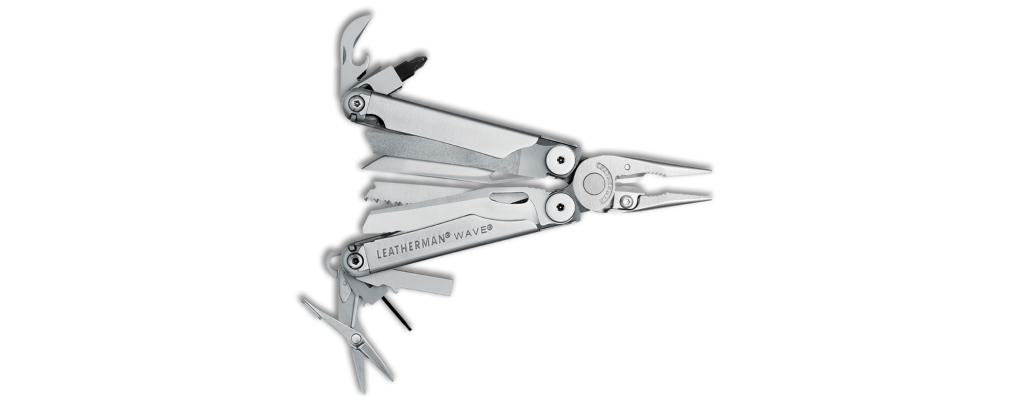
First of all, it took the place of my Leatherman Wave on my hip. Don’t get me wrong, I still love the Wave, but the ARC has a few things going for it that I really like. The first thing is the FREE technology. I could get to the knife blades and maybe the pliers with one hand on the Wave, but I can access far more with the ARC. That comes in handy, because when you need a Leatherman, your hands are usually already full.
Leatherman FREE Series
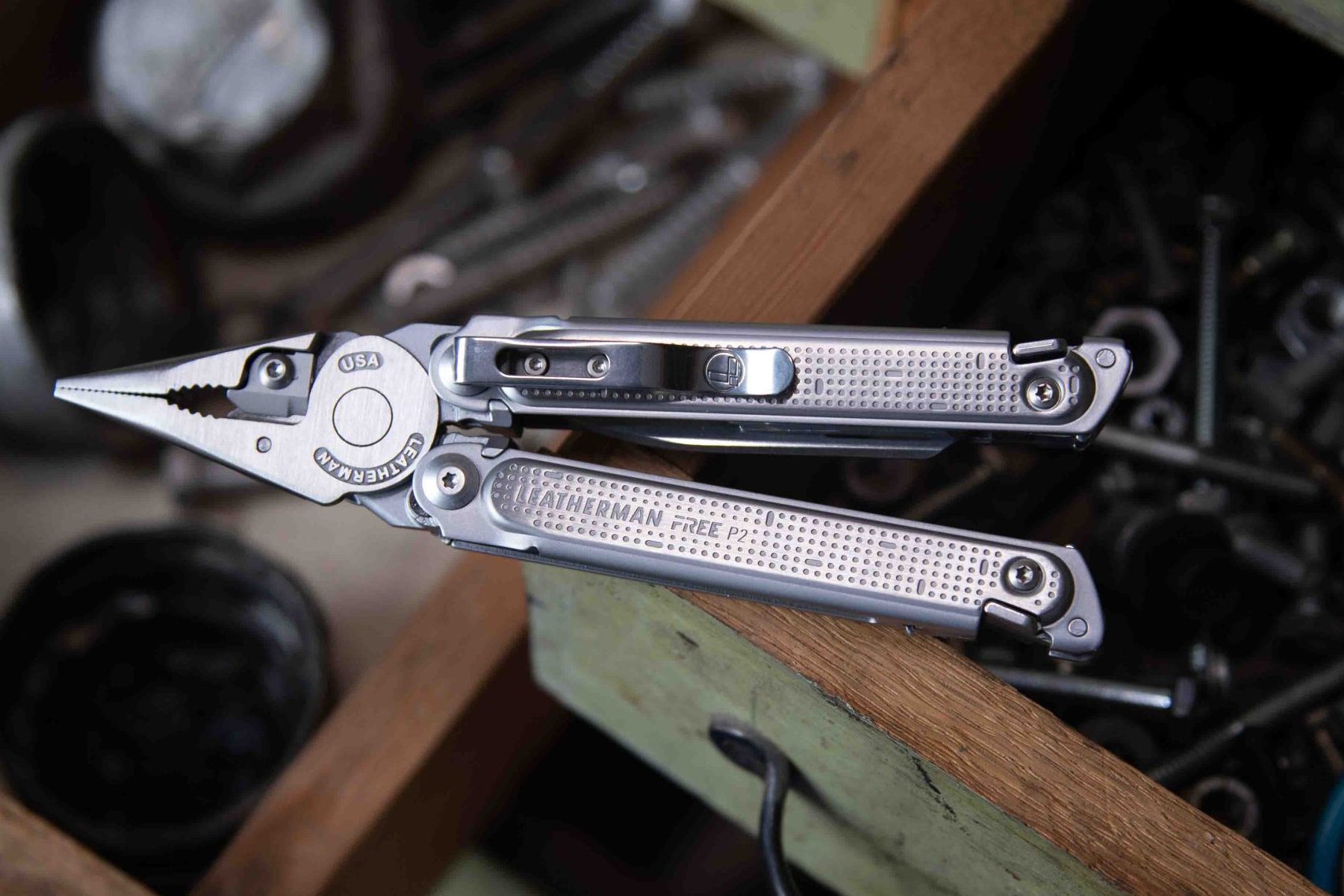
Compared to the FREE series, once again the ARC takes it in my book. The thumb stud actuator on the blade makes it easier to get to the knife. I’m glad that the toolset traded the serrated knife for the dual-sided file as well. I just don’t find myself needing serrations, like hardly ever, but that file is nice to have! Like the FREE P, K, and T series, the ARC uses Leatherman’s patented lock system. It’s simple, strong, and intuitive, and I think it would be cool to see standalone folders with it in the future.
Also, the FREE P Series, which is closest to the ARC, is discontinued. Sorry for the letdown on that one…
Leatherman Surge
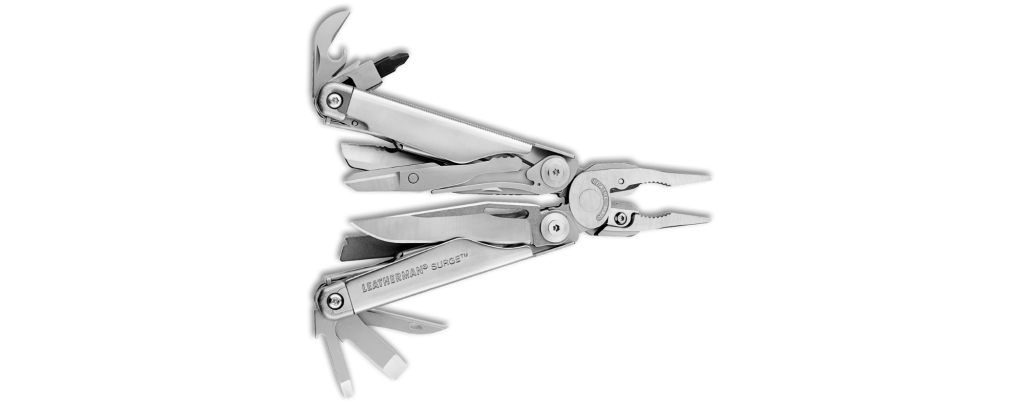
I think the only Leatherman I might choose over the ARC in some situations is the Surge. The Surge is big. It has bigger, meatier pliers, more robust tools all around, and a T-Shank attachment for the saw. That means that, to some extent, you can put whatever tool you like in the Surge. If I were a construction worker, or was building out a survival kit, I think I’d go for the Surge, but that’s just my opinion.
Pros and Cons
On the Pros side, the Leatherman ARC is a high-quality tool. I’ve put it to an eclectic array of tasks, and it’s performed them all in satisfactory fashion. I love the MagnaCut blade because I’m a knife nerd, and I think the black and satin color scheme is as pleasing to the eye as any Leatherman I’ve seen.
But my favorite feature of the ARC, even more than its MagnaCut blade, is the impact surface. You’d be surprised how often you find something that needs a good, hard smack with a chunk of metal. I’ve used it to crack nuts, pound stakes, hammer nails and staples, flatten bent fence brackets, dislodge a screw in my tire, and so much more. Seriously, this tool is amazing, and I wish Leatherman had put it on every tool from the get-go. It does have a slot in the middle, so it’s a bit tricky when pounding small nails, but remember it’s never going to be as good as a real hammer. But it’s a whole lot better than having no hammer at all!
The big "problem" with the ARC that has a bunch of reviewers up in arms is the wire cutters. At this point, I’m going to invite you to skip a few paragraphs ahead, because what I’m going to explain is perhaps the most egregious nitpick I’ve ever seen in the knife world. But in an effort to be thorough, I’m going to talk about the wire cutters.
Begin Wire Cutter Rant
Like most Leatherman tools, the Leatherman ARC has replaceable wire cutters because cutting wire wears them down. But the ARC’s cutters are a little different: the hard wire cutter corners are slightly rounded off. This tiny tweak means that, occasionally, you might need to clamp down twice to cut something. Leatherman hasn’t officially said why, but I suspect it’s to prevent that corner from snapping when cutting hard wire.
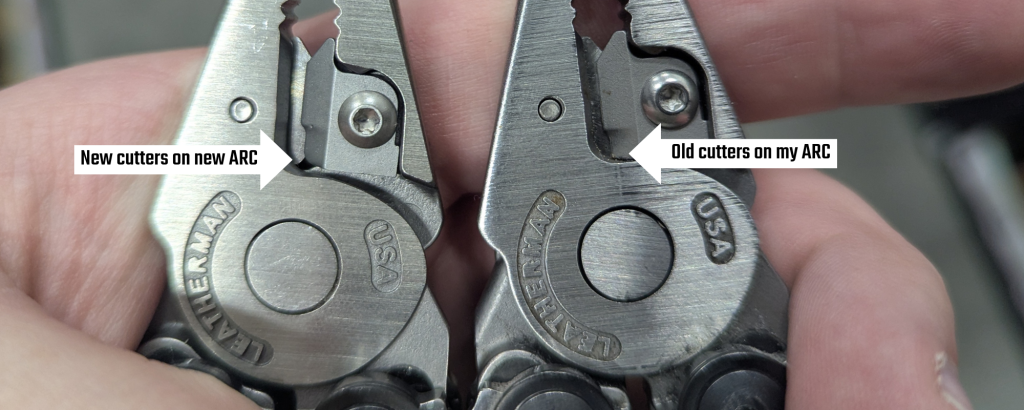
But some folks in the multitool world lost their minds over it. They claimed the cutters were now brittle, breaking, or just plain worse. I’m not saying their cutters didn’t break, but remember: they’re meant to be replaceable.
That said, I don’t think Leatherman is literally cutting corners to sell more replacements. Mine have worked just as well as others I’ve used. I even swapped in my old Wave cutters, and saw no difference.
And by the way, all Leatherman tools now ship with this new cutter design—so if it’s a dealbreaker for the ARC, it’s a dealbreaker for the whole lineup.
But for me and my house, these cutters are just fine.
End Wire Cutter Rant.
This is also the most expensive in-line Leatherman tool to date, with a price of $249.95 at the time of writing. I think that most of that price comes from the MagnaCut blade and the DLC coatings, so if those aren’t important to you, then I might point you to another Leatherman tool with a more accessible price.
Use Cases
I see the Leatherman ARC as the perfect EDC multitool for someone who doesn’t want to also carry a knife. Pocket real estate is valuable for a lot of people. They don’t want to carry around a ton of stuff, and the idea of carrying a multitool and a knife is just too much. And if you must pick between the two, why would you ever pick the knife when the multitool has so much more functionality? Usually it’s because a dedicated knife has a much more comfortable handle and a better blade steel.
But the Leatherman ARC negates the materials issue, and if you only use your knife once in a blue moon, the ergonomics aren’t as troublesome. Thus, if you want the most functionality for the least number of nouns in your pockets, then I believe the Leatherman ARC is your man.
It’s also worth mentioning that, to an extent, the Leatherman ARC is customizable. Thanks to its conventional TORX hardware, a rarity from Leatherman, you can disassemble and reassemble it to suit your preferences without having to fuss with proprietary bits. I got my dad an ARC for Father’s Day, and he’s left handed. I was able to take the tool apart, move the blade to other side, reverse the thumb stud, and reassemble the tool using only simple TORX bits. And it works perfectly! My dad has a left-handed Leatherman ARC thanks to the hardware!
And if you want to take it a step further, there is a large and growing aftermarket of tools you can add in place of stock. I’ve seen hex bit drivers, scalpel blade holders, T-Shank sockets, and more. But keep in mind that Leatherman does not cover disassembly in their warranty. Make sure you know what you’re doing before you break out the drivers!
Conclusion
The Leatherman ARC is expensive, but it’s a worthy pick for a one-stop shop multitool. If I could only carry the ARC and no knives or other tools for the rest of my life, I think I’d be just fine. Its one-hand operability is a huge sell for me, and I love knowing that I always have a MagnaCut blade. But my favorite feature, bar none, is the impact surface on the plier head. Seriously, you should get one just for that.
Do I regret my purchase? Not in the slightest. If I lost my ARC, I’d replace it without a second thought. But I’ve seen the data, and I know that just about everyone who likes to be prepared already owns a Leatherman of some sort. To them, is it worth upgrading?
I don’t know. If your Leatherman has served you well and met your needs for the last decade or more, then probably not. I don’t think its increased functionality will be all that game changing. But if you are looking for a cream-of-the-crop tool that offers the best of the best to discerning enthusiasts, then maybe you should do like I did and retire the old Leatherman in favor of the ARC.
And if you don’t have a Leatherman yet, my advice is to buy once and cry once. The ARC is incredible, and I can’t recommend it enough!


 Copyright © 2026 Blade HQ. All rights reserved