All Knife Grinds Explained: Hollow, Chisel, Compound & More


In This Guide
If you have questions about blade grinds, you’ve come to the right place.
In this guide, we’ll walk you through each blade grind type, suggest certain grinds for different use cases, and answer some frequently asked questions.
You can also watch this video to learn the basics. It’s over ten years old, but the information is still accurate!
What Is a Blade Grind?
The grind of a knife’s blade refers to the primary bevels that taper down to the edge from the spine.
The cutting edge of the knife is usually a secondary bevel and is independent of the grind.
A blade’s grind affects its cutting performance in various ways.
Thick grinds with steep bevels and a lot of material behind the edge will be strong but harder to cut with, while thin grinds slice smoothly but are more vulnerable to damage.
Types of Blade Grinds
There are six main types of blade grinds. Here’s a summary:
- Flat – flat and tapered like a V
- Hollow – concave bevels that curve inward
- Convex – convex bevels that bow outward
- Scandi – flat with no secondary edge bevel
- Chisel – asymmetrical with only one side ground
- Compound – any combination of two or more grinds (flat and hollow is most common)
You can read about each in detail below and compare cross-sections to get a clear picture.
Flat Grind

For this blade grind, it’s all in the name: flat.
A full flat grind tapers from the blade spine all the way to the edge (as seen on the Spyderco Manix 2), and a partial flat grind (like on the Pro-Tech Malibu) leaves a portion of the blade at full thickness.
Other names for a flat grind include V-grind (because it looks like a V) and Saber grind (specifically when there’s a lot of blade left at full thickness).
The higher the grind (the closer it is to the blade spine), the smoother the cutting experience.
Shop Flat-Ground Knives
Carousel
Carousel-
4.5
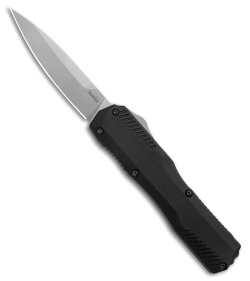 Kershaw Livewire MagnaCut D/A OTF Automatic Knife Black (3.4" Stonewash) 9000MSRP: $380.00Our Price: $249.95
 -
3.5
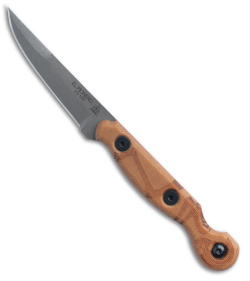 TOPS Knives El Pionero Fixed Blade Knife Tan Canvas Micarta (3.3" Stonewash)MSRP: $239.95Our Price: $169.95
 -
5
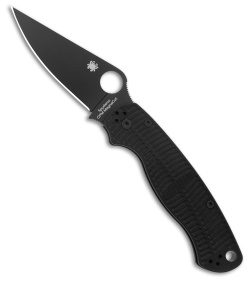 Spyderco Paramilitary 2 MagnaCut Salt Knife Black G-10 (3.45" Black DLC)MSRP: $304.00Our Price: $228.00
 -
5
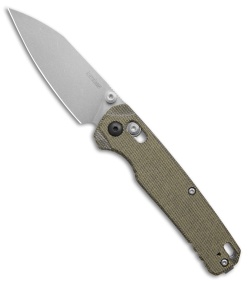 Kershaw Bel Air MagnaCut DuraLock Knife Olive Micarta (3.1" Stonewash)MSRP: $249.99Our Price: $159.95
Hollow Grind

A hollow grind curves inward on both sides with concave bevels. It’s the second most common grind type.
Being so thin, it excels at smooth, clean cuts; it has very little material behind the edge, greatly reducing friction.
If you hear a knife nut describing a knife as "slicy," odds are good they’re talking about a knife with a hollow grind.
There’s a trade-off to a hollow grind’s excellent cutting performance: it’s somewhat frail compared to other grind types.
But don’t let that scare you away: for most EDC (everyday carry) applications, a hollow grind is plenty strong.
Famously, the Chris Reeve Sebenza 31 uses a hollow grind. The reason is that, as the edge wears away with use, there’s always more thin material there to sharpen, preserving the smooth cutting experience.
Shop Hollow-Ground Knives
Carousel
Carousel-
4.75
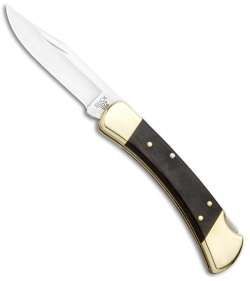
-
5
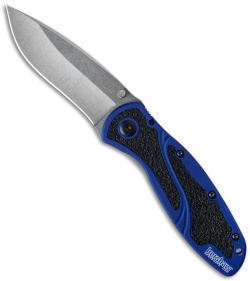 Kershaw Blur Assisted Opening Knife Navy Blue (3.375" Stonewash) 1670NBSWMSRP: $159.99Our Sale Price: $79.99!
 -
4.75
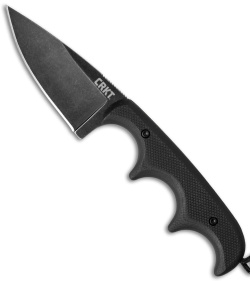 CRKT Folts Minimalist Drop Point Neck Knife Black G-10 (2" Black SW) 2384KMSRP: $44.99Our Price: $36.95
 -
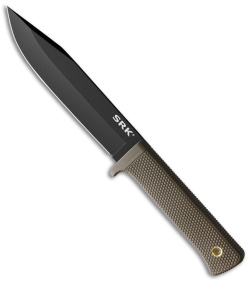 Cold Steel SRK Survival Rescue Knife Fixed Blade Dark Earth (6" Black)MSRP: $61.95Our Price: $44.95
 -
4.75
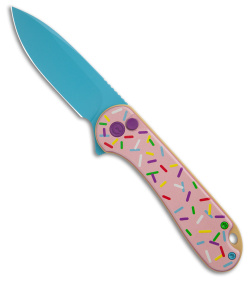 CIVIVI Dessert Warrior® Elementum II Button Lock Knife Pink G10 (2.9") DonutMSRP: $78.90Our Price: $67.00
 -
5
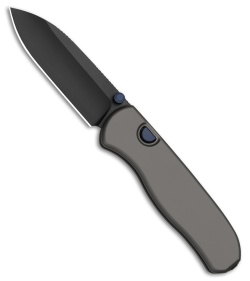 Kizer Drop Bear Zero Button Liner Lock Knife Dark Gray Al (3.1" Matte DLC Elmax)MSRP: $152.88Our Price: $129.95
Convex Grind

A convex grind is the opposite of a hollow grind: it has two convex bevels tapering down to the edge.
The grind type is famously strong—in fact, mathematically, it’s the strongest.
But, as always, there are tradeoffs.
In the case of the convex grind, due to how much materials it behind the edge, it will cut more reluctantly.
Rockstead has perfected the convex grind into a mirror-polished art, with no secondary bevel for the edge.
You’ll also find convex grinds on more rugged fixed blade knives (like the Fallkniven Knives A1) that want the added durability
Convex grinds are rare on folders, but there are plenty of great fixed blade options to choose from.
Shop Convex-Ground Knives
Carousel
Carousel-
4
 Fallkniven NL4 Northern Lights Frey Knife Leather Fixed Blade (5.25" Satin) FrejMSRP: $544.95Our Price: $359.95
 -
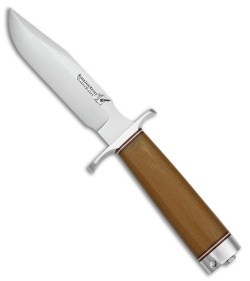 BlackJack Classic Model 5 Fixed Blade Knife Natural Micarta (5.5" A-2)MSRP: $372.95Our Price: $285.00
 -
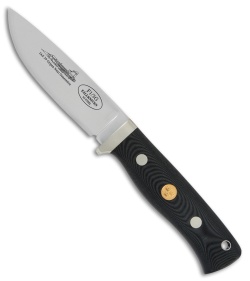 Fallkniven Knives F1 Pilot Fixed Blade Knife Black Micarta (3.75" Satin)MSRP: $719.95Our Price: $529.95
 -
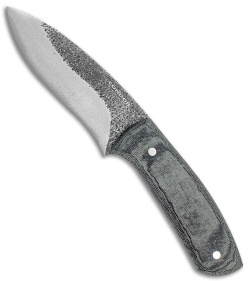 Condor Talon Fixed Blade Knife Gray Micarta (4.625" Black) CTK80445HCMSRP: $101.95Our Price: $85.91
 -
-
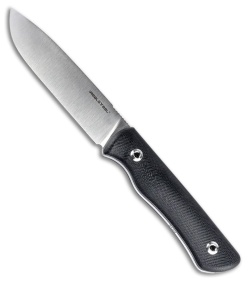
Scandi Grind

At first glance, you may be tempted to call it a flat grind, but there’s an important distinction:
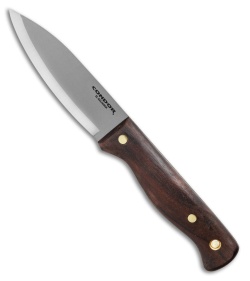
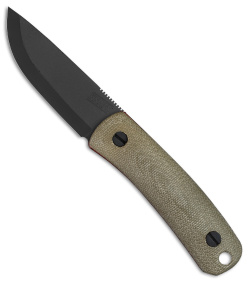
A Scandi grind has no secondary bevel for the edge and always leaves much of the blade at full thickness.
"Scandi" is short for "Scandinavian" and refers to blades common in the ancient European north.
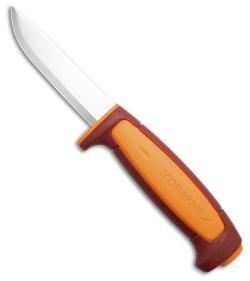
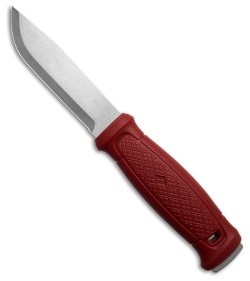
A fantastic example of a Scandi grind in today’s market is the fixed blades produced by Morakniv.
The Morakniv 511 is a modern take on the ancient Mora-style knives that helped define the Scandi grind.
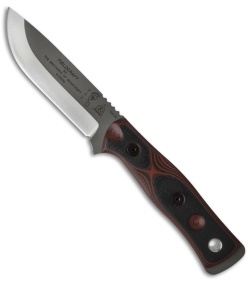
Outside of that, you’re most likely to encounter Scandi grinds on robust, fixed blades built for hard use (like the White River Firecraft Puukko).
Shop Scandi-Ground Knives
Carousel
Carousel-
-

-
5
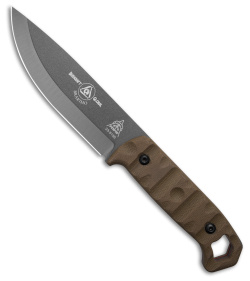 TOPS Knives Brakimo Fixed Blade Knife RMT OD Green Micarta (5.3" Satin Tungsten)MSRP: $305.00Our Price: $214.95
 -
-
-
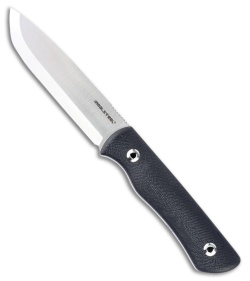
Chisel Grind

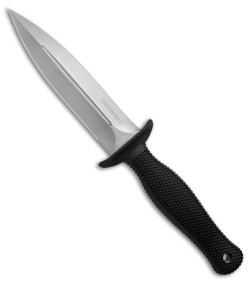
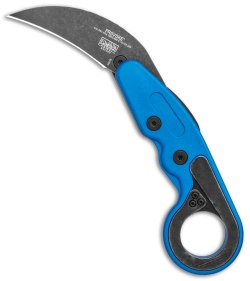
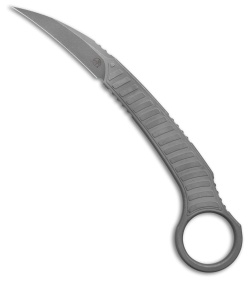
Chisel-ground blades are asymmetrical: one side is flat, the other is angled.
This grind type creates a unique cutting experience that’s favored by some and disliked by others.
But there’s no denying it can look awesome!
You’ll most commonly encounter chisel-ground blades on tactical/combat knives and Japanese-style kitchen knives.
Shop Chisel-Ground Knives
Carousel
Carousel-
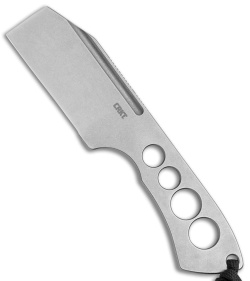 CRKT Jon Graham Razel Chisel Fixed Blade Knife Gray Stainless Steel (2" Steel)MSRP: $49.99Our Price: $34.95
 -
3.75
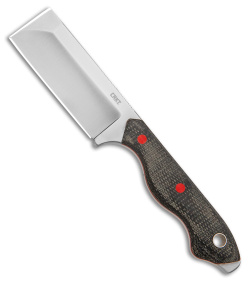 CRKT Jon Graham Razel Fixed Blade Knife Black Resin Infused Handle (2.97" Satin)MSRP: $89.99Our Price: $69.95
 -
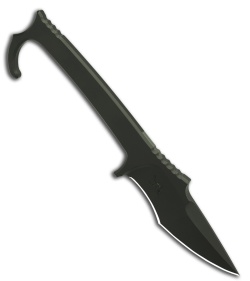
Compound Grind
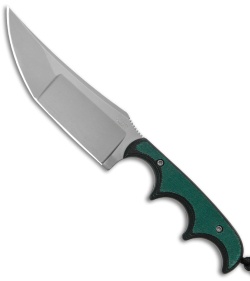
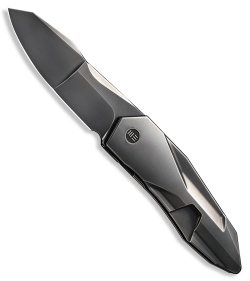
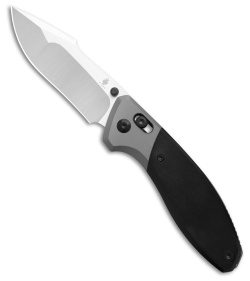
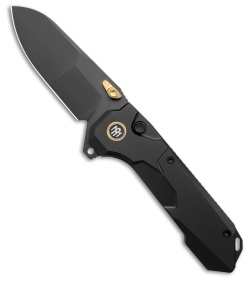
A compound grind is any combination of any of the above grinds.
The most common compound grind is flat and hollow. Many tanto knives, like the Chaves Redencion Integral, have a flat grind at the tip and a hollow grind for the main edge.
Compound grinds are often favored for custom knives for the style points: a well-executed compound grind looks fantastic!
Shop Compound-Ground Knives
Carousel
Carousel-
5
 CRKT Folts Minimalist Katana Neck Knife Green Resin/Fiber (3.6" Bead Blast)MSRP: $44.99Our Price: $34.95
 -
 WE Knife Co. Cecchini Solid Frame Lock Knife Polished Gray Ti (3.9" Polished)MSRP: $530.00Our Price: $469.00
 -
-
 Kizer Staffi Clutch Lock Knife Black + Gray Titanium (3.30" Polished)MSRP: $281.00Our Price: $239.00
 -
 REMETTE RT-Cosmic Button + Liner Lock Knife Black Titanium (2.8" DLC)MSRP: $260.00Our Price: $221.00
 -
5
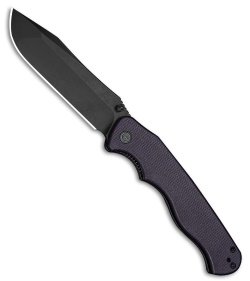 CIVIVI HEADBANGER Liner Lock Knife Purple Canvas Micarta (3.8" Black SW)Our Price: $89.00Preorder Down Payment: $5.00
 -
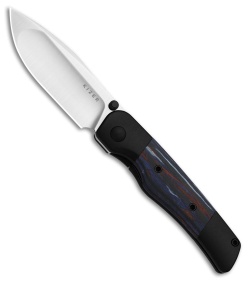 Kizer Coywolf Frame Lock Knife Black Ti/Reconstituted Wood (3.1" Satin S45VN)MSRP: $164.66Our Price: $139.96
How to Choose a Blade Grind
So you know about blade grinds, but which is best for how you’ll be using your knife?
To help answer that question, we’ve compiled some common knife use cases, each with a list of grinds well-suited to it.
EDC (Everyday Carry)
- Flat
- Hollow
- Compound
Hunting
- Flat
- Hollow
Camping
- Flat
- Convex
- Scandi
Bushcraft/Survival
- Convex
- Scandi
- Chisel
Collection
- Hollow
- Chisel
- Compound
Tactical/Military
- Flat
- Chisel
Woodworking
- Flat
- Scandi
- Chisel
Kitchen/Food Prep
- Flat
- Hollow
- Chisel
FAQ
What’s the best all-around blade grind?
There isn’t a true "best" blade grind, but if we had to pick, we’d go with a full flat grind for its excellent balance of slicing ability, strength, and versatility.
What’s the best blade grind for EDC?
Full flat and hollow grinds work well for EDC. Flat grinds are more versatile, while hollow grinds favor slicing.
What’s the best blade grind for slicing?
Thin hollow grinds are generally the best slicing.
What’s the strongest blade grind?
Convex, as it provides the most support behind the edge. Scandi is the runner-up.
What’s the difference between a flat grind and a hollow grind?
A flat grind tapers in straight lines like a V, while a hollow grind curves inward with concave bevels.
What’s the difference between a Scandi grind and a saber grind?
A Scandi grind normally runs directly to the edge. A saber grind usually ends in a smaller secondary edge bevel.
Is a Scandi or convex grind better for bushcraft?
It depends on how you’ll be using your knife: Scandi grinds excel at controlled wood carving, while convex grinds are better suited to chopping and harder use.
What’s a swedge/false edge?
Some knives have a grind at the spine of the knife that doesn’t create an edge. This is called a "false edge" or "swedge." For an example, check out the Benchmade Bugout and the Bradford Guardian 3.


 Copyright © 2026 Blade HQ. All rights reserved