



Who Invented the Bowie Knife? The Origin of the Bowie Knife Explained

In this Article
- How to Pronounce "Bowie"
- Who Invented the Bowie Knife
- The Vidalia Sandbar Fight (1827)
- The Bowie Knife’s Spreading Fame
- The Bowie Knife of Today
First things first, while much of the following information is verified fact, much the Bowie knife‘s history is lost to time.
The Bowie knife is legendary in the truest sense: its history is enigmatic, the characters surrounding it have conflicting accounts, and contemporary documentation is… let’s say, sparse.
There are some things we know for sure, but many that we don’t—and those are the parts that make the best story.
We’ll give you a healthy helping of both.
How to Pronounce "Bowie"
Well, folks, it’s "BOO-EE" not not "BOH-EE."
If you’re like me, you grew up saying it the wrong way. You live and you learn.
Anyway, without further ado, we present the legends and facts of the origin of the Bowie knife!
Who Invented the Bowie Knife?
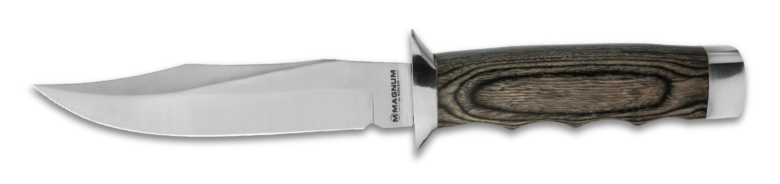
As far as anyone can tell, Rezin P. Bowie designed the first Bowie knife and had it forged by blacksmith Jesse Clifft (though not all historians agree).
Rezin gave the knife to his brother, the more famous James Bowie.
It’s James Bowie who’s responsible for the Bowie knife’s popularity (and who it’s named after), and it’s largely his escapades that we’ll be discussing today.
The Bowie Knife Didn’t Always Look Like That
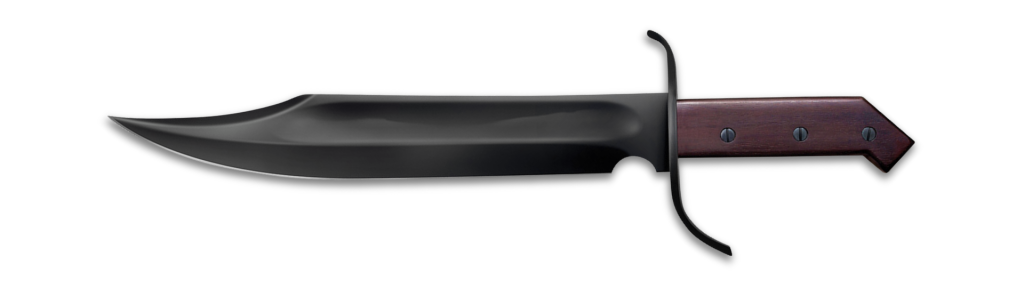
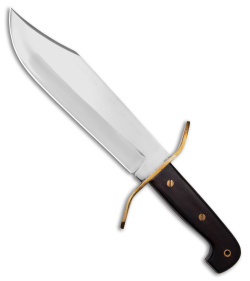
A Bowie knife, as understood today, is a large fixed blade knife with a guard and clip point blade (see picture).
As with many things, the Bowie changed over time. James Bowie and his associates are said to have iterated on the design, refining it over the years.
We think the original Bowie knife had a straight-backed spine and a Spanish-style handle (notably lacking those defining features I mentioned above).
The Bowie knife’s signature clip point comes thanks to knifemaker James Black, who, in 1830, built a new version of the iconic blade for James following his legendary Sandbar Duel (more on that below).
Today, the look has been refined and reproduced a million times, appearing in movies, on soldiers’ belts, and in many custom knife collections.
Here are some high-quality Bowie knives you can buy here at Blade HQ:
Shop Bowie Knives!
Carousel
Carousel-
4.75
-
5
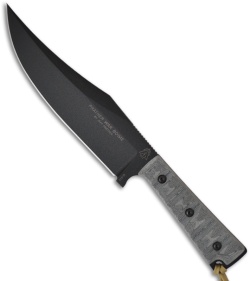 TOPS Knives Prather War Bowie Fixed Blade Knife (7.8" Black) PWB-01MSRP: $305.00Our Price: $214.95
 -
5
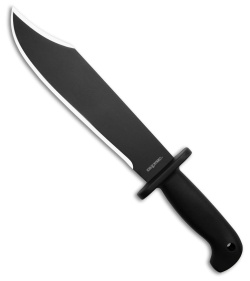
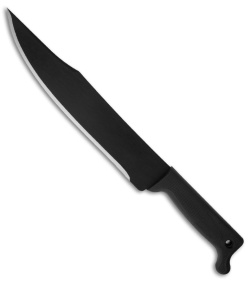 Cold Steel Bowie Point Machete Fixed Blade Knife (12" Black) 97BWM12SMSRP: $42.95Our Price: $33.95
 -
4.75
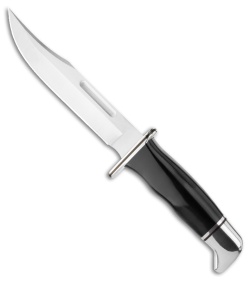
-
4.5
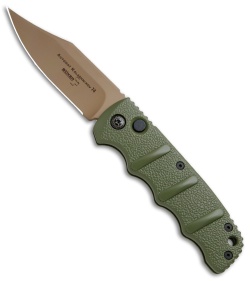 Boker Desert Warrior Kalashnikov Bowie Automatic Knife OD Green (D2 Copper)MSRP: $79.95Our Price: $54.95
 -
4
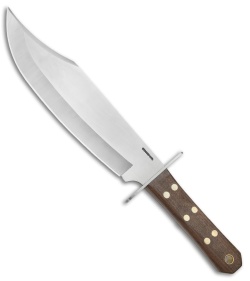 Condor Undertaker Bowie Fixed Blade Knife (10.1" Satin) CTK2804-10.3MSRP: $117.95Our Price: $100.22
 -
5
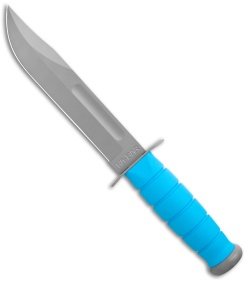 Ka-Bar Bowie USSF Space-Bar Fixed Blade Knife Blue Kraton (7" Gray) 1313SF ForceMSRP: $148.95Our Price: $116.95
The Vidalia Sandbar Fight (1827)
On September 19, 1827, Samuel L. Wells and Dr. Thomas H. Maddox had arranged to have a duel.
The exact cause of the duel remains disputed, but historians point to a combination of political rivalries, financial disputes, long-standing personal feuds, and questions of honor among the men involved.
It was to take place on a sandbar in the Mississippi River between Vidalia, Louisiana, and Natchez, Mississippi. Both men came with their seconds and three other supporters.
James Bowie was among the supporters of Wells, and had a score to settle with one Major Norris Wright, who was one of the supporters of Maddox.
Wright had previously shot Bowie, who had understandably begun carrying a large knife in anticipation of encountering Wright at the duel.
Lastly, General Samuel Cuny (one of Wells’ other supporters) and Colonel Robert A. Crain (Maddox’s second) also had beef.
In summary, the three feuds were:
- Wells vs Maddox – the duelists
- Bowie vs Wright – supporters on opposite sides
- Cuny vs Crain – supporter/second on opposite sides
The Duel
Both duelists fired two shots.
All four shots missed.
Everybody lived.
*happy kazoo*
The Brawl
It all went sideways when Cuny called out to Crain, saying, "Col. Crain, this is a good time to settle our difficulty."
Crain shot in response, missed, and hit Bowie in the hip.
There are many conflicting accounts of what happened next.
To make a long story short, Bowie went to retaliate against Crain, but Crain dropped him to his knees with a smack from his gun.
Wright, who’d previously shot Bowie, tried to shoot him again, but missed. He settled for stabbing Bowie with his cane sword, but only wounding him.
Shot and stabbed, Bowie drew his knife and pulled Wright down onto the blade, ending his attacker’s life.
Bowie was shot a few more times before the fight was over, and many others were wounded.
Cuny, alongside Wright, were the only ones to die.
The Aftermath
After the dust settled, Crain—who’d started everything by accidently shooting Bowie in the hip—carried the bleeding Bowie off to be treated by a doctor.
Bowie said, "Col. Crain, I do not think, under the circumstances, you ought to have shot me." (Reasonable, if you ask me.)
The doctor said, "How [Bowie] lived is a mystery to me, but live he did." (Also reasonable.)
The Bowie Knife’s Spreading Fame
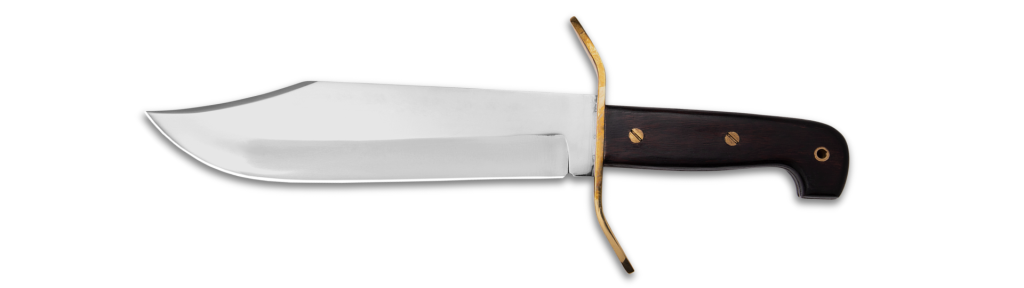
It wasn’t just any knife that James Bowie used to defend himself against Wright.
It was his Bowie knife.
And now everyone knew Bowie could use it.
Newspapers across the country sensationalized the fight, helping transform both James Bowie and his knife into legends almost overnight.
As accounts—accurate, embellished, or otherwise—spread, the Bowie knife became an icon of a rugged frontier lifestyle.
"Bowie knife" evolved to simply mean "a big knife."
Circling back, this is the point when James Black refined the Bowie knife, giving it more of the look it has today.
James Bowie’s Tragic End
Bowie famously perished at the Battle of the Alamo during the Texas Revolution, defending the iconic stronghold with his famed Bowie knife.
The Bowie Knife of Today
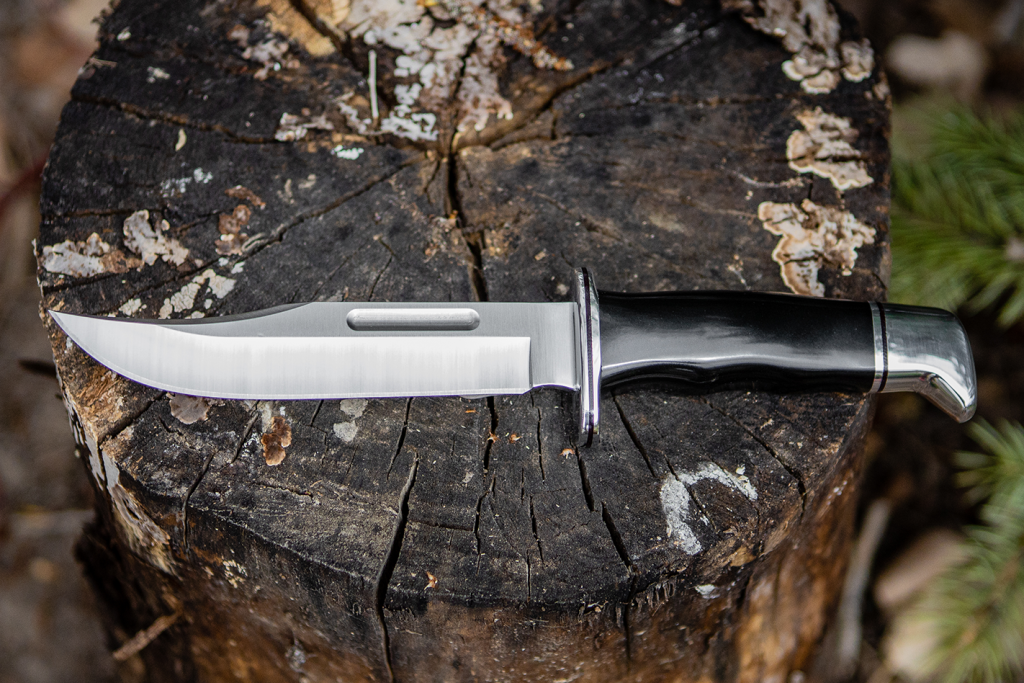
Nowadays, the Bowie knife remains popular for many reasons.
Whether Rezin Bowie, Jesse Clifft, or James Black deserves the most credit will probably be debated for another hundred years.
What isn’t debated is the Bowie knife’s legacy: Nearly two centuries after the Sandbar Fight, it’s still one of the most recognizable knife designs ever created.
After all that, I wouldn’t be surprised if you wanted a Bowie knife (I do after writing it). Check out all the Bowie knives we have for sale!


 Copyright © 2026 Blade HQ. All rights reserved